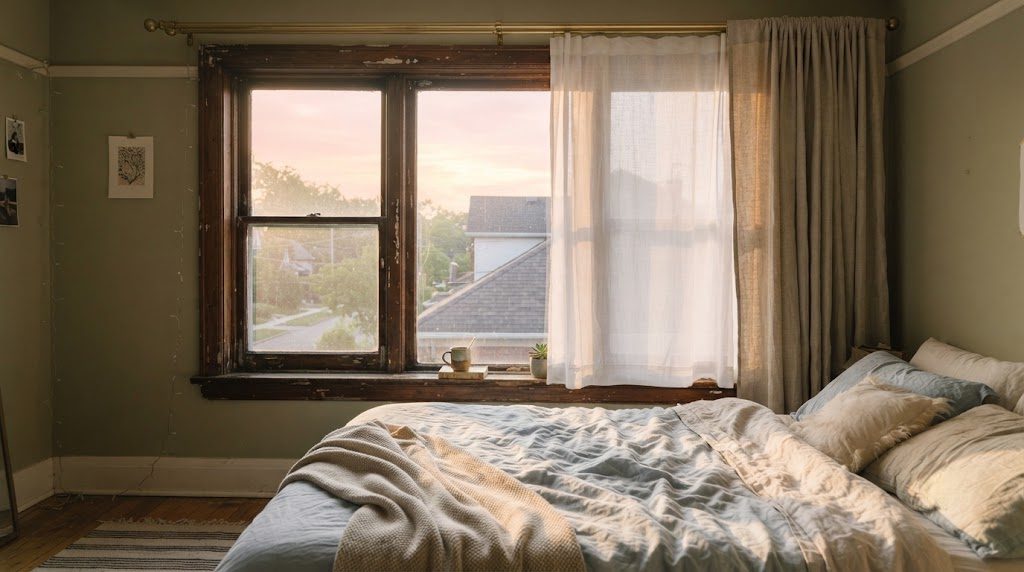
An east-facing bedroom window is a contradiction. At six in the morning, it's a glaring alarm clock you never set. By two in the afternoon, it's a gentle, warming light source that makes the room feel alive. A single curtain panel can't handle both jobs. You need a system.
The Morning Problem: Too Much Light, Too Early
East windows catch the sun the moment it clears the horizon. In summer, that can mean bright, direct light flooding your bedroom by 5:30 a.m. Even a standard "room-darkening" curtain with a loose weave will leak enough light to wake a sensitive sleeper.
What Actually Blocks Dawn Light
You need a dense, tight weave or a true opaque lining at the inner layer—closest to the glass. Blackout doesn't have to mean a stiff, plasticky panel. Look for a heavyweight cotton or polyester with a high thread count and a non-coated blackout liner. The goal is zero pinholes when backlit. This inner layer stays closed all night and opens fully in the morning.
The Afternoon Opportunity: Let the Warmth In
Once the sun swings south and west, that same east window becomes your friend. In a cold climate, afternoon solar heat gain is free energy. Leaving a heavy blackout panel closed all day blocks that warmth entirely, making your heating system work harder.
The Sheer That Works While You're Away
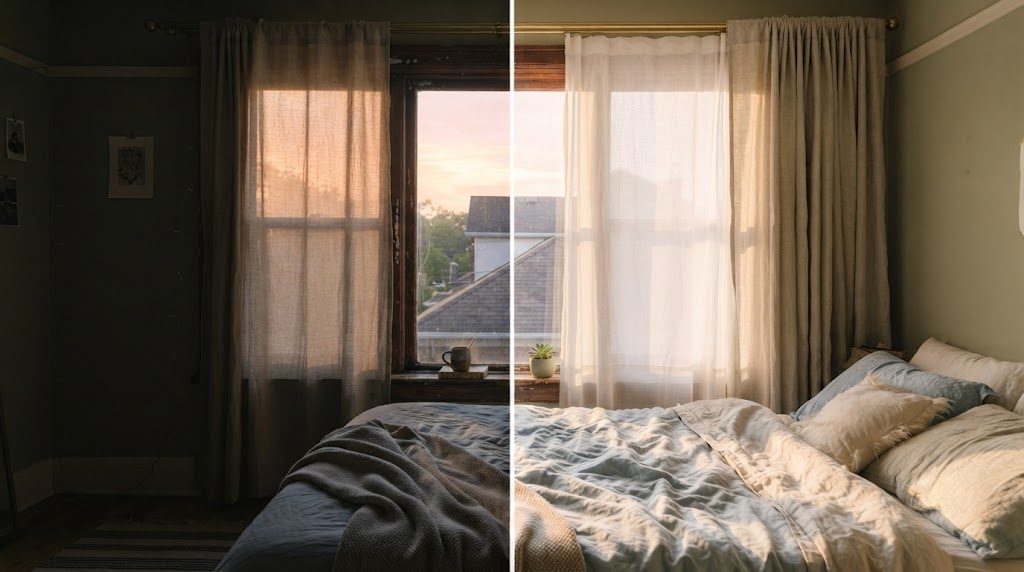
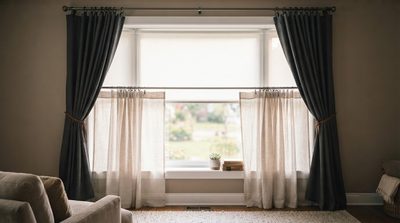
Install a second rod, closer to the room, with a light, unlined sheer or semi-sheer. When you draw the blackout layer open in the morning, the sheer provides daytime privacy while letting in heat and light. It also softens the bare window view from the street without sacrificing thermal benefit.
Building the Two-Layer System
The Hardware Setup That Makes It Work
You need a double curtain rod or two separate rods—one mounted closer to the window frame for the blackout, one extended outward for the sheer. This allows each layer to slide independently without tangling. Ball-bearing rings or a smooth traverse track make opening the heavy blackout layer effortless first thing in the morning.
The Seasonal Adjustment
In winter, reverse the logic: keep the blackout layer closed at night for insulation, open it to the sheer during sunny afternoons, and close it again at sunset to trap residual heat. In summer, you might leave the blackout open all day and rely on the sheer to cut glare while inviting breeze. The system adapts; you just shift the panels.
One Window, Two Layers, Zero Compromise
An east-facing bedroom doesn't need a miracle fabric. It needs two fabrics, each assigned a clear job. The blackout layer protects your sleep at dawn. The sheer layer collects afternoon warmth and softens the light. Together, they turn the most problematic window orientation into one you stop resenting—and start using.

No letters yet — be the first to write.