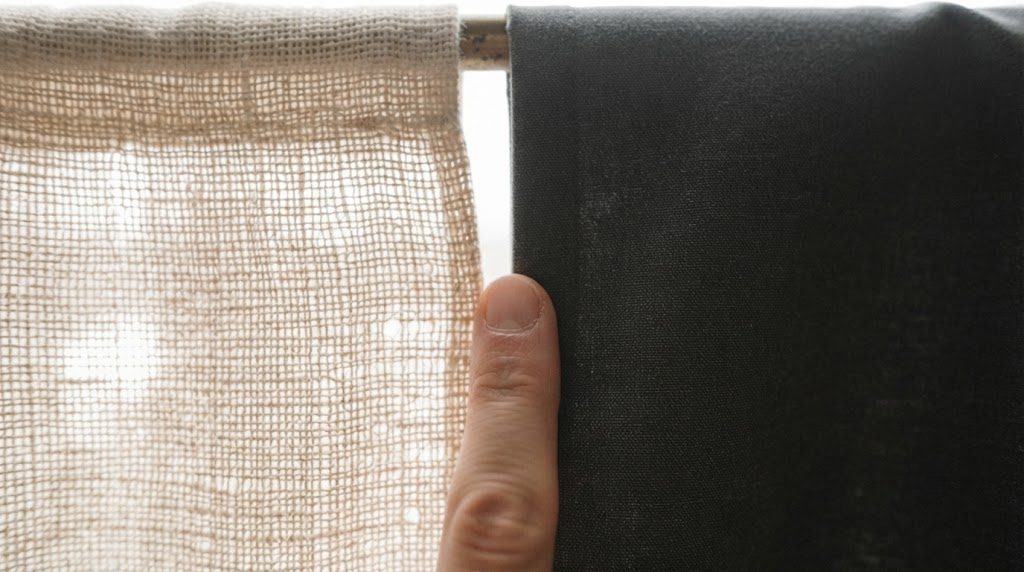
Fiber content tells you what a curtain is made of. Weave density tells you how it will perform. It's the number that determines whether light leaks through, whether cold air sneaks past, and whether the fabric will sag after two years of hanging. Yet almost no curtain label prints it. You have to learn to read the weave yourself.
What Is Weave Density, in Plain English?
Imagine a window screen. A screen with widely spaced wires lets through air, light, and insects if the gaps are large enough. A screen with tightly packed wires blocks more of everything. Weave density works the same way: it's simply how many yarns are packed into a given area of fabric—usually measured by the number of warp yarns (vertical) and weft yarns (horizontal) per square inch.
The Pick Count: What Those Numbers Actually Mean
In textile specifications, this is called the "pick count" or "ends per inch." A loose, breezy linen sheer might have a count of 30 picks per inch. A dense blackout cotton sateen could reach 120 or higher. Higher isn't always better—a sheer curtain is supposed to be open—but for any curtain claiming to block light or insulate, the pick count is the real performance metric hiding behind the marketing claims.
What Weave Density Controls
Light Control and Privacy
Hold a loose-weave fabric to the light, and you'll see pinpricks or full gaps between the yarns. Those gaps are light highways. As weave density increases, the gaps shrink until light must pass through the fiber material itself rather than flowing freely around it. For a bedroom, you want density high enough that backlight reveals almost no space between yarns. For a living room sheer, controlled gaps create the airy glow you want.
Insulation and Draft Reduction
Air moves through the same gaps that light does. A dense weave creates a physical barrier that slows heat loss through the window. This is why a heavyweight, tightly woven cotton duck can outperform a loosely woven "thermal" polyester with a thin foam backing. The insulation is in the structure, not the sticker.
Drape and Longevity
Weave density also determines how a curtain ages. Loose weaves stretch and distort under their own weight over time—that's why cheap open-weave panels develop a scalloped, sagging hemline after a year. Dense fabrics distribute tension more evenly across thousands of contact points between yarns. They hold their shape, their hem stays level, and the heading pleats remain crisp.
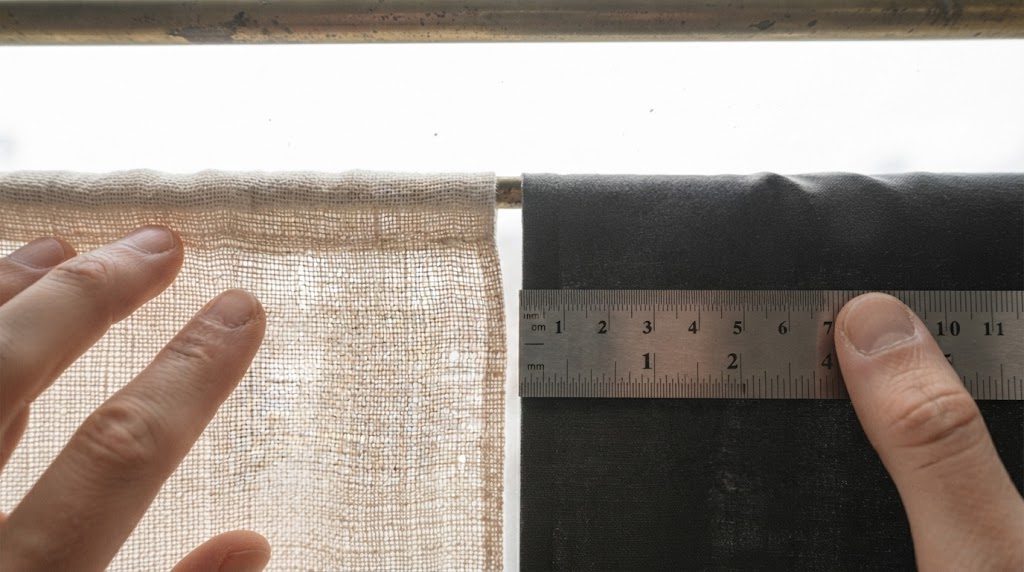
How to Estimate Density Without a Lab
You don't need a magnifying lens, though a linen tester helps. Hold the fabric up to strong light and count the yarns visible in a quarter-inch span. Multiply by four for a rough ends-per-inch estimate. More practically, simply compare two swatches side by side against the same window. The one that shows fewer, smaller gaps is the denser weave. Your eye is a better instrument than you think.
The Weave-Density Tradeoff to Remember
Density adds weight and cost. Extremely dense fabrics drape beautifully but require sturdier hardware and more effort to draw open and closed. For most windows, the sweet spot is dense enough to do the job—blocking morning light or holding back winter drafts—but not so heavy that the rod bows under the load. Match the density to the demand, and you'll never overpay for performance you don't need.


No letters yet — be the first to write.