When I hear easy install curtain rods, I picture a renter holding a pencil in one hand, a level in the other, and trying not to put a third hole in an old plaster wall. The appeal is obvious: fewer tools, less measuring, and no weekend spent wrestling with anchors. But a quick installation only works when the hardware suits the window, wall, and curtain fabric. A thin cotton panel and a lined wool-blend drape do not place the same load on a rod.
I have installed window treatments in everything from new apartments to drafty 1920s houses in Minneapolis. The most reliable approach is not simply choosing the package with the word easy on it. It is matching the support system to the textile hanging from it.
What makes a curtain rod genuinely easy to install?
Run your fingers along a good lightweight rod and you will notice that it feels rigid rather than springy. That small sensory difference matters. Easy install curtain rods usually reduce work through integrated brackets, tension mechanisms, adhesive pads, or a small number of screws. Each method solves a different problem.
Tension rods are the fastest option because they press between two sides of a window recess. They work well for café curtains, sheer panels, and lightweight cotton, especially in a rental. They are less suitable for wide blackout curtains, heavy velvet, or a pair of lined panels that will be opened daily. Pressure can also mark delicate paint or fail when the recess is uneven.
Wall-mounted rods with snap-in brackets are a stronger middle ground. You usually mark two points, install anchors or screws, and click the rod into place. Look for brackets with a broad backplate and a positive locking feature. A tiny round cup may look discreet, but it concentrates force in one small area. Easy install curtain rods should simplify the job without making the support flimsy.
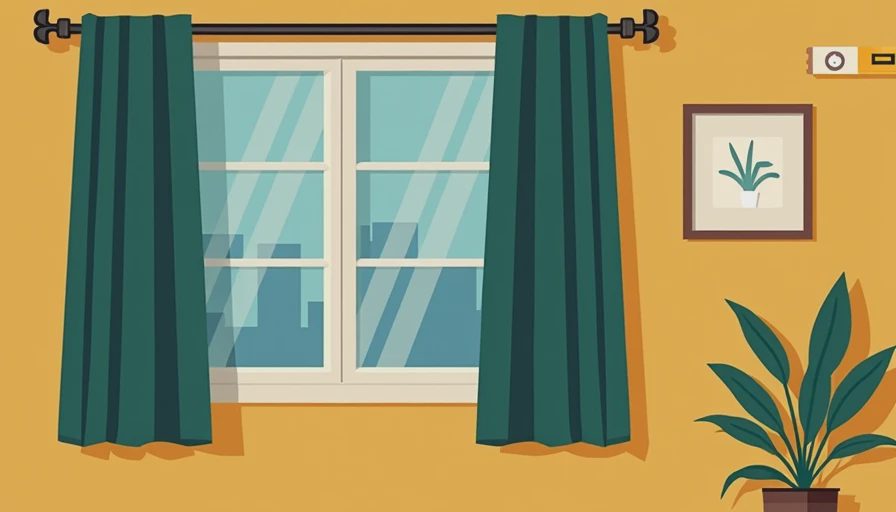
Match the rod to your wall and window
Touch the wall beside the window before choosing hardware. Smooth drywall feels consistent and hollow when tapped; old plaster often feels harder, more brittle, and less forgiving around a drilled hole. For drywall, self-drilling anchors can work for light and medium curtains, while heavier treatments deserve a stud, a toggle anchor, or a bracket fastened into solid framing.
Brick, concrete, and tile require different bits and anchors. Adhesive brackets can be useful for very light sheers on clean, smooth surfaces, but they are a poor choice for lined panels or a humid bathroom. Easy install curtain rods are not universal because the wall is part of the load-bearing system.
Measure the window trim, then add roughly 6 to 12 inches to the total rod width when the room allows. That extra length lets the fabric stack beside the glass instead of blocking it. Mounting the rod 4 to 8 inches above the trim can also make a window appear taller. Use a level, but do not trust a level alone if the ceiling or trim is visibly uneven; visual alignment matters too.
For narrow windows, two brackets may be enough. For a rod longer than about 60 inches, a center support often prevents the middle from sagging. A telescoping rod is convenient, but its overlapping sections can be weaker than a single continuous rod. Keep the overlap near a bracket whenever possible.
Fabric weight changes everything
Hold a sheer polyester voile in one hand and a lined cotton sateen panel in the other. The voile feels almost weightless and collapses into a narrow stack. The sateen has more body, and its lining adds another layer that increases both weight and friction. That difference determines whether easy install curtain rods remain secure after weeks of opening and closing.
As a practical guide, lightweight rods suit sheers, unlined linen-look panels, and narrow café curtains. Medium-duty rods are better for cotton twill, woven polyester, and standard blackout curtains. Heavy steel or wood rods with substantial brackets are appropriate for lined linen, velvet, wool blends, and wide panels with deep pleats.
Fabric construction matters as much as fiber. A loose plain weave usually weighs less than a dense jacquard, even if both are labeled cotton. A blackout curtain may contain a foam or acrylic backing that adds stiffness and mass. Grommets can also make a panel pull harder across the rod because each ring presses against the surface. If the curtain feels difficult to move by hand, choose stronger hardware than the package recommendation.
For cold climates, I often prefer a lined or interlined panel over an ultra-thin decorative layer. The added textile creates a fuller hand and slows drafts near the glass, but it also requires better supports. Easy install curtain rods can handle that upgrade when the bracket is anchored properly rather than merely stuck to the wall.
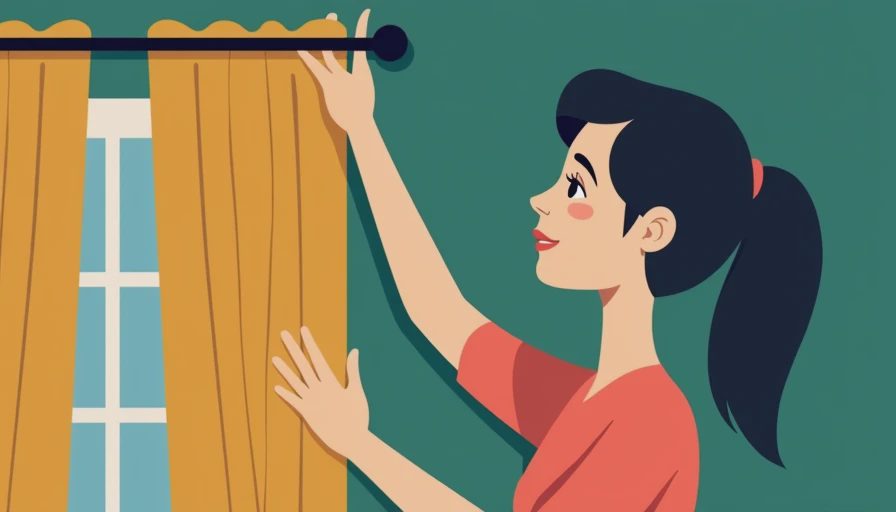
The fastest installation sequence
Start by laying out the rod, brackets, screws, anchors, and a measuring tape on the floor. Assemble the rod loosely and slide on the curtain before lifting it. This catches a common mistake: discovering that the rod finial cannot pass through the panel pocket after everything is mounted.
Next, mark the bracket locations with painter's tape. Check that the rod clears the top of the window and that the curtain will not rub against a radiator, handle, or air vent. Drill a small pilot hole where needed. If the bit suddenly meets solid resistance, you may have found framing; use an appropriate screw rather than forcing a plastic anchor.
Install each bracket without fully tightening it, place the rod in position, and check the level from several feet away. Tighten the hardware gradually. Finally, open and close the curtains ten times. Watch for bracket movement, rod flex, and fabric catching at the center support. Easy install curtain rods should pass this real-use test, not merely look straight in a product photograph.
A better choice for renters and older homes
Renters often need a low-damage solution, but low damage does not have to mean low performance. For a lightweight privacy panel, a tension rod inside the recess is sensible. For a heavier curtain, look for removable mounting systems rated for the actual load and use several smaller panels instead of one oversized piece. Dividing a 100-inch span into two 50-inch panels reduces the pulling force at each side.
Older homes need patience. Plaster can chip when a drill enters too quickly, and wood trim may hide uneven framing. A small pilot hole, low drill speed, and a quality anchor are worth more than a decorative bracket with a weak base. Easy install curtain rods are especially useful in historic rooms when their hardware is compact but their anchors are properly selected.
What I would buy for different windows
For a bathroom or narrow kitchen window, I would choose a stainless or coated tension rod and a washable polyester café curtain. Polyester handles repeated humidity better than untreated linen and dries quickly. For a bedroom with blackout panels, I would use a steel rod with snap-in brackets and a center support, even if installation takes ten extra minutes.
For a living room, a simple metal rod can support lined cotton or linen while keeping the visual focus on the weave. Spend money on the brackets and anchors before paying extra for ornate finials. A $25 rod with reliable supports is a better investment than a $60 decorative rod that bends at the middle.
Easy install curtain rods are worth choosing when they make measuring and fastening simpler, not when they hide a weak construction. Feel the rod, weigh the curtain, inspect the wall, and plan for daily movement. That short checklist gives you a window treatment that hangs cleanly, blocks the light you need, and stays attached through the heating season.


No letters yet — be the first to write.