The feel of a well-made curtain is immediately different: it has enough weight to fall in a straight line, but enough flexibility to fold without looking stiff. Learning how to install curtains over blinds lets you keep the privacy and precise light control of blinds while adding softness, insulation, and a more finished room. The key is not simply hanging one treatment in front of another. You need to plan for projection, hardware strength, clearance, and the behavior of the fabric.
This arrangement works especially well in cold climates. A blind can stop glare and provide daytime privacy, while a full-length curtain reduces drafts around the glass and frame. Curtains do not replace weatherstripping or properly fitted shades, but a dense textile can create a still air layer near the window. That small buffer feels useful beside an old double-hung window in January.
Choose the right curtain and rod
Before measuring, decide what performance you want. A lightweight linen-look panel filters light beautifully, but its open weave offers limited insulation. A tightly woven polyester, cotton-polyester blend, or lined wool-blend drape blocks more light and falls with greater authority. Blackout lining is useful in bedrooms, although it can make a small room feel visually heavy. Thermal lining adds body, but it is not a substitute for sealing leaks.
For most windows, mount the curtain rod several inches above the blind casing and extend it 6 to 12 inches beyond each side. That extra width allows the panels to stack away from the glass when open. Measure the blind first, including any headrail, brackets, and operating cords. Then measure from the intended rod position to the floor or sill. Curtains that stop just above a radiator should not cover it, because blocking warm air can reduce heat circulation and damage some fabrics over time.
The rod must project far enough to clear the blinds. A low-profile roller shade may need only 3 inches of depth, while a wood blind with a deep headrail can require 5 inches or more. Hold a tape measure against the wall and imagine the curtain hanging from the rod. If the fabric touches the blind slats, it will catch, rub, and look crowded.
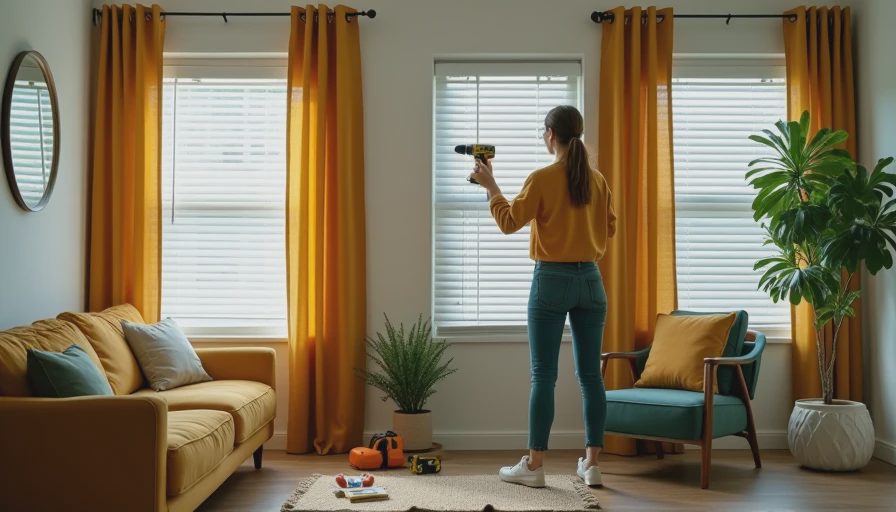
How to install curtains over blinds without crowding the window
The simplest method is to use a standard curtain rod mounted above the blind. Mark both bracket locations with a level, then check for studs. A stud provides the strongest attachment, but drywall anchors rated for the rod and curtain weight work when studs are not available. Avoid relying on small plastic anchors for heavy lined panels; a pair of 50-inch velvet curtains can exert much more leverage than the package weight suggests.
If the blind is inside-mounted, you have more flexibility because the window trim remains available for the curtain brackets. For an outside-mounted blind, install the curtain rod above and in front of the blind casing. A return rod, which curves toward the wall at each end, helps close side gaps and is particularly useful for blackout fabric. French returns also make a window look wider and reduce the bright strips that appear along the edges at night.
When drilling, use a level rather than trusting the ceiling or trim. Older homes often have subtly uneven surfaces. A level rod makes the installation look intentional even when the architecture is not perfectly square. If you are renting, tension rods can work for lightweight café curtains, but they are usually a poor choice for floor-length lined panels. Their grip can weaken, and the curtain will not hang as smoothly.
Learning how to install curtains over blinds also means protecting the blind controls. Keep chains, cords, and wand mechanisms accessible. Do not trap a wand behind a thick panel, and do not let curtain fabric rest against a moving cord. For homes with children or pets, use the appropriate cordless or cord-safety setup required for the blind and keep loose operating loops secured.
Fabric weight, fullness, and the finished hang
Touch two fabrics at the store: a thin polyester voile will feel almost weightless, while a cotton twill or lined jacquard will resist your hand and fall in a cleaner column. That difference affects the rod, bracket, and amount of fabric you need. For a relaxed look, curtain width should generally total about 1.5 to 2 times the window or rod width. Sheer panels often look better closer to twice the width because their folds are part of the design. Heavy fabric can look crowded at the same fullness.
If insulation is your priority, choose a close weave and add lining. The face fabric determines color, texture, and much of the drape; the lining determines how light and cold transfer through the panel. A white lining reflects summer sun, while a neutral lining can preserve a richer exterior appearance. In my Minneapolis windows, a lined medium-weight panel often gives a better balance than an extremely heavy curtain that overwhelms the radiator and makes opening the blind awkward.
Install the panels, then let them hang for several days before judging them. Fibers relax, seams settle, and packaged folds disappear. If the hem floats unevenly over the floor, measure again after the fabric has relaxed. Do not assume an expensive fabric will automatically hang better. A poorly sized panel in silk-look polyester can appear less polished than a correctly measured cotton blend.

Common installation mistakes to avoid
One frequent mistake is mounting the rod directly on the blind brackets. This saves a few minutes but leaves no room for the curtain to move, creating friction and a pinched silhouette. Another is choosing a rod based only on length. Long rods need a center support, especially with lined drapes, but the support should not prevent the panels from closing across the middle.
People also underestimate side light. If blackout performance matters, extend the rod beyond the blind and consider a return or wider side panels. A curtain that reaches the floor but is only as wide as the glass can look elegant while allowing a bright outline around the frame. For daytime privacy, however, a lighter fabric may be preferable because it preserves natural light without forcing the room into darkness.
Finally, do not ignore cleaning instructions. Cotton, linen, and wool can shrink or change shape with heat. Polyester is usually easier to care for, but excessive dryer heat can damage coatings and linings. Vacuum with a soft brush attachment, spot-test cleaners on a hidden hem, and follow the manufacturer’s care label.
A practical installation sequence
Start by operating the blinds fully open and closed to identify the space they need. Measure the window, blind, wall, and desired curtain length. Select brackets that match the rod diameter and estimate the combined weight of both panels. Mark the bracket positions, locate studs or install suitable anchors, and verify the marks with a level before drilling.
Attach the brackets firmly, place the rod, and test it with one panel before adding the second. Open and close the blinds several times. Watch for slats catching on the fabric, a wand hitting the panel, or a curtain hem brushing a heater. Make small adjustments now rather than after steaming and hemming the curtains.
For anyone learning how to install curtains over blinds, this test is the step that separates a neat installation from a frustrating one. The two treatments should operate independently. Blinds should tilt or lift without pulling the curtain, and curtains should slide without snagging the blind.
A quality rod and thoughtfully selected fabric usually matter more than decorative finials or a trendy pattern. Spend first on secure hardware, adequate width, and a lining suited to your room. Once those functional decisions are right, the color and texture become enjoyable instead of compensating for a window treatment that does not work.
When you understand how to install curtains over blinds, you can create a layered window that performs through bright summers and cold winters. Measure the blind, allow clearance, anchor the rod properly, and choose fabric with enough body for the job. The result should feel calm and practical: controlled light in the morning, privacy at night, and a curtain that hangs beautifully rather than fighting the window behind it.



No letters yet — be the first to write.