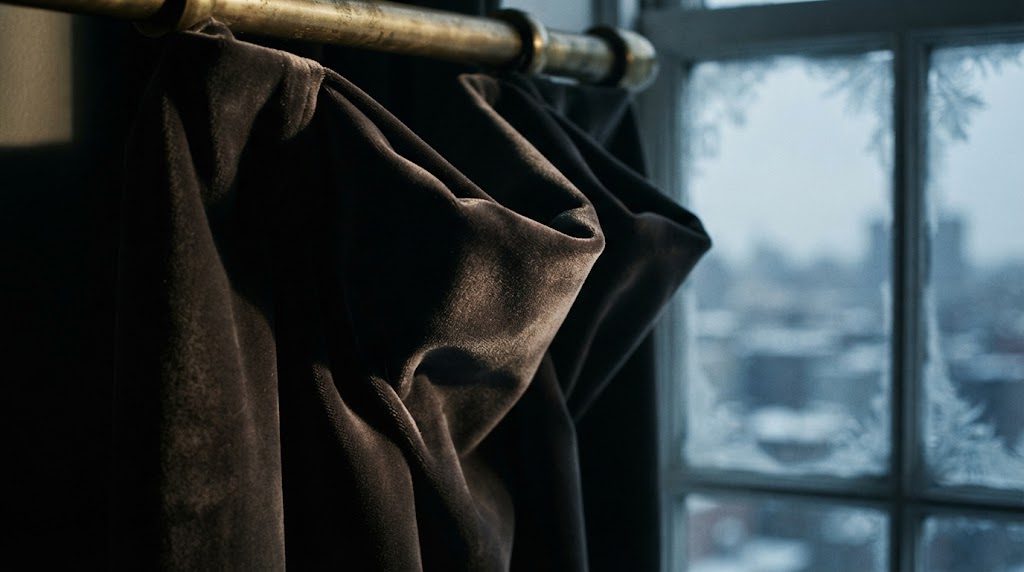
Velvet is the fabric that makes you want to reach out and touch a curtain. That instinct is exactly right—velvet's defining feature is physical, not visual. It's a pile fabric, meaning short fibers stand upright from a woven backing, creating a surface that absorbs and reflects light differently depending on the direction you touch it. That luxurious hand-feel comes with real performance tradeoffs, and understanding them is the difference between a curtain you love for a decade and one you regret by spring.
When Velvet Is Perfect
Bedrooms Where Light Control Is Non-Negotiable
Velvet is arguably the best light-blocking fabric that doesn't rely on a chemical coating. The upright pile fibers trap and scatter light between them, creating multiple angles of absorption rather than a single flat surface for light to bounce off. A quality cotton or polyester velvet with a dense pile can achieve near-blackout darkness without any foam backing. For a master bedroom that faces east or a nursery that needs to be dark for afternoon naps, velvet is not just luxurious—it's genuinely functional.
Cold-Climate Rooms Where Insulation Matters
All that pile doesn't just trap light; it traps air. Velvet curtains create a thicker still-air layer than flat-woven fabrics of the same weight, which measurably improves their insulating value. In my Minneapolis living room, the heavyweight cotton velvet panels I hang from November through March make a detectable difference in how warm the seating area feels after sunset. They're doing real thermal work.
Spaces Where Acoustic Dampening Is a Bonus
Hard surfaces—wood floors, plaster walls, large windows—create echo. Velvet's three-dimensional surface absorbs sound waves rather than reflecting them. In a dining room with a big window and bare floors, velvet drapes can soften the acoustics noticeably. It's a secondary benefit, but one that matters in open-plan homes.
When Velvet Is a Nightmare
Humid or Moisture-Prone Rooms
Velvet and humidity are enemies. In a bathroom, the pile absorbs moisture from steam, creating an environment where mildew can develop deep in the fibers. Even in a kitchen near a cooking surface, grease particles and humidity cling to the pile and are nearly impossible to remove without professional cleaning. Keep velvet in dry, low-moisture spaces only.
Dust-Sensitive Households
That same pile structure that traps light and air also traps dust, pet dander, and pollen. If anyone in your home has allergies, velvet curtains require weekly vacuuming with an upholstery attachment to stay hygienic. Neglect this, and they become fabric air filters that never get changed. In a household with shedding pets or dust sensitivity, flat-woven fabrics are more practical.
Rooms Where You Want Light, Not Just Block It
Velvet is greedy with light. It doesn't just block it; it absorbs it completely, which can make a north-facing room feel cave-like even during the day. If the room already struggles with low natural light, a full velvet drape will exacerbate the problem. Reserve velvet for rooms where darkness is a feature, not a drawback.
The Pile Direction Detail That Changes Everything
Why Nap Direction Matters
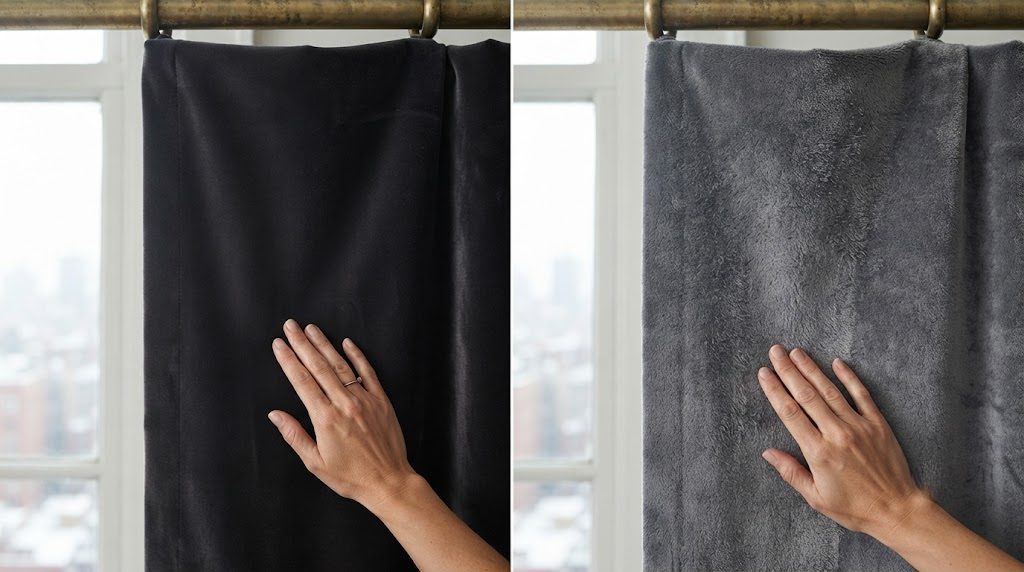
Velvet has a nap—the direction the pile fibers lean when brushed. If you run your hand down the fabric in one direction, it feels smooth; in the other, it feels rough. On a curtain, this means the fabric will reflect light differently depending on which way the panel is hung. Two panels cut from the same bolt but hung with opposing nap directions will look like slightly different colors in certain light. When buying velvet curtains, check that all panels in a room have the same nap orientation. Mark the back of each panel with a small tag indicating "top" and "bottom" so you never accidentally reverse one after cleaning.
The Honest Care Reality
Velvet curtains are high-maintenance. Most are labeled dry-clean only. Cotton velvet may shrink and crush in water; polyester velvet can sometimes handle gentle washing but may lose pile height over time. Steam cleaning can refresh the pile between professional cleanings, but a home washing machine is a gamble. If you're not willing to commit to professional cleaning every few years, velvet isn't your fabric—and that's perfectly fine. Understanding what you're signing up for is how you end up with curtains you can live with.


No letters yet — be the first to write.