Sliding door window treatment ideas get interesting the moment you stand in front of a real patio door in January. A good treatment has to do three jobs at once: keep the glass from feeling like a cold plate, preserve usable traffic through the opening, and still look calm when the panels are closed. In my Minnesota work, the right answer is almost never the cheapest package on the shelf. It is the fabric, lining, and hardware combination that matches the way the door is used.
The first thing I look at is not color. It is clearance. A sliding door needs room to move, room to stack, and room for the handle. If the fabric piles up too far into the opening, the treatment becomes annoying on day one. Measure the width of the glass, the full trim, and the wall space beside the door, then think about how often someone walks through carrying groceries, laundry, or a dog leash. Those habits matter more than a design trend.
Sliding Door Window Treatment Ideas That Solve Drafts First
If the room is cold, start with the edge gaps. Warmth escapes where the fabric stops short of the frame, so a panel that looks elegant in a photo can still leak comfort in real life. I like to extend treatments beyond the glass and, when the room allows it, beyond the trim by a few inches on each side. That extra overlap improves privacy and cuts the hard, bright line you get at the edges of bare glass.
A traverse rod is worth explaining here. It is a track with carriers that lets the fabric open and close smoothly without yanking the panels by hand. On a wide opening, that smooth motion is not a luxury; it is what keeps people using the treatment instead of leaving it bunched open. A wand draw is even better for many households because it keeps fingers off the cloth and reduces wear at the pinch points.
The other measurement that matters is stack-back, which simply means how much wall the open fabric occupies. Heavy drapery with a full gather needs more stack-back than a flatter panel style. If you only have 18 inches of wall on one side, a thick velvet panel can eat half of it. That is why one set of sliding door window treatment ideas works beautifully in a loft and falls apart in a narrow breakfast nook.
Fabric Choices That Change How the Door Feels
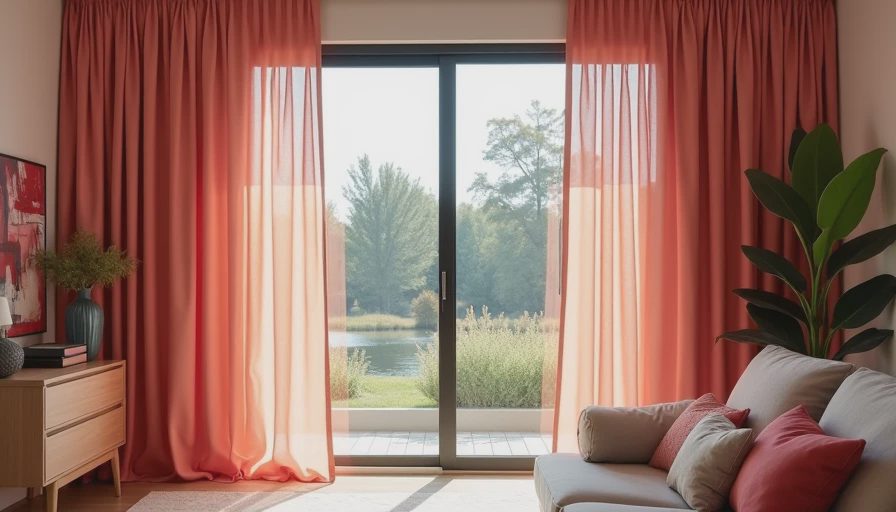
Feel a sample in your hand and the difference shows up fast. A lightweight linen panel has a dry, airy hand and a loose drape, so it softens the room but does little for insulation. A medium-weight polyester or cotton blend with blackout lining hangs straighter and blocks more glare. Velvet feels dense, absorbs light, and gives a room a finished look, but it also wants more space when it stacks and more care when it is cleaned.
Among sliding door window treatment ideas, the best fabric is the one that balances body, movement, and maintenance. Body means the cloth has enough weight to hang without curling at the hem. Movement means it glides on the rod without fighting the hardware. Maintenance matters too, because a panel near a patio door gets fingerprints, dust, and the occasional splash from a wet boot. For many homes, a lined polyester drape is the practical sweet spot: easier to live with than linen, less fussy than silk, and usually less expensive than a heavy natural fiber.
Interlining is a hidden layer sewn between the face fabric and the lining. It adds body, improves drape, and gives the fabric a warmer, more substantial feel. In a cold climate, that middle layer often matters more than one extra inch of fabric width. If you want a room to feel quieter and more protected, interlining is one of the best places to spend money. If the opening is mainly decorative, you can skip it and keep the cost down.
There is also a practical difference between full blackout and room-darkening. Blackout lining blocks nearly all light, which helps on west-facing glass and in bedrooms. Room-darkening reduces glare without turning the room cave-dark. For a living room slider, room-darkening is often the better compromise because it still lets the space feel awake during the day.
Hardware Is Half the Solution
On a sliding door, the rod is as important as the cloth. A metal traverse rod with smooth carriers keeps the treatment moving cleanly across the opening, and that matters more than decorative finials nobody notices after the first week. If the ceiling height allows it, a ceiling-mounted track can make the room feel taller and keep the fabric from competing with the door frame. If the opening has a deep trim head, a face-mounted rod is usually simpler and easier to service later.
Grommet panels are cheap and easy to buy, but they do not always slide as cleanly, and they usually show more glass at the edges when open. Ripple-fold panels look more tailored because the folds are evenly spaced, but they need the right track and enough budget to do the system properly. In plain numbers, a basic off-the-shelf setup might cost $100 to $300 for parts, while custom lined drapery on a quality track can move into the $900 to $2,500 range for a large opening. If you add interlining or labor for very wide glass, the total can climb from there.
A Budget That Matches Real Life
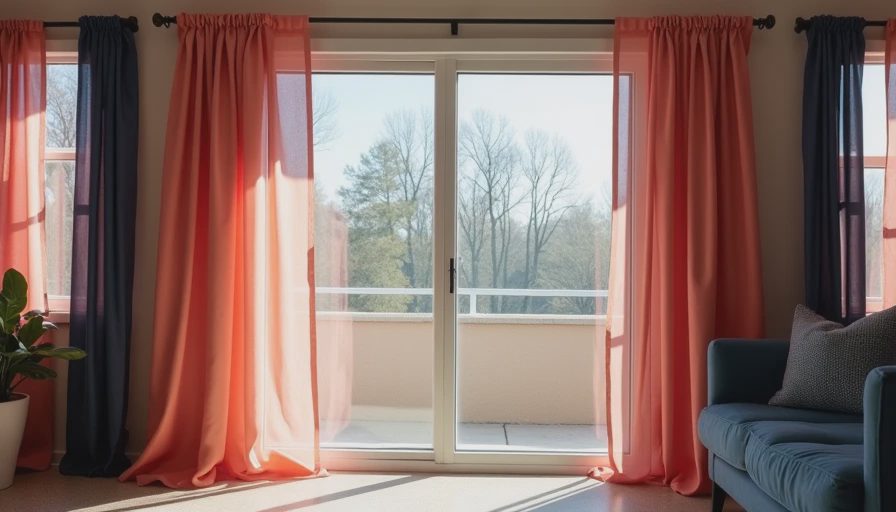
Not every door needs the expensive answer. For a rental or a starter home, I often suggest a layered approach: an inside-mounted cellular shade for the thermal break, plus simple side panels for softness and light control. That split gives you the performance of a shade and the look of drapery without forcing one fabric to do every job. It is also easier to replace later if the room changes.
If you are shopping the mid-range, pay for the parts you touch every day. Buy the better track, the better lining, and the hem weight that keeps the panels from floating around. Save on decorative extras like elaborate tiebacks or puddled hems, because those details rarely improve how the door works. I have seen plenty of expensive treatments look awkward simply because the hardware was undersized or the stack-back was ignored.
For a wide family room slider in a cold climate, I usually think in layers. A shade handles the glass. A lined panel softens the room. If privacy matters at night, the drapery closes. If sun control matters in the afternoon, the shade does the heavy lifting while the fabric stays open. That is why sliding door window treatment ideas often work best as a two-layer system instead of one heroic piece of cloth.
What I Would Do in a Cold, Bright Living Room
If I were solving this in a Minneapolis bungalow, I would choose a clean traverse track, a medium-weight face fabric, and a lining that is at least room-darkening, with interlining if the budget allows. I would extend the panels beyond the trim so the door can still slide freely and the room does not feel pinched when everything is open. Then I would test the fabric in daylight and at night, because cloth that looks soft at noon can turn harsh under lamp light after dinner.
The best sliding door window treatment ideas are the ones that respect the door first and the décor second. Start with movement, draft control, and stack-back. Then choose the fabric that gives you the look you want without making the opening harder to live with. If you want help deciding, compare two swatches side by side, feel the weight, and imagine how each one will behave after a winter of daily use. That is usually where the answer shows up.



No letters yet — be the first to write.