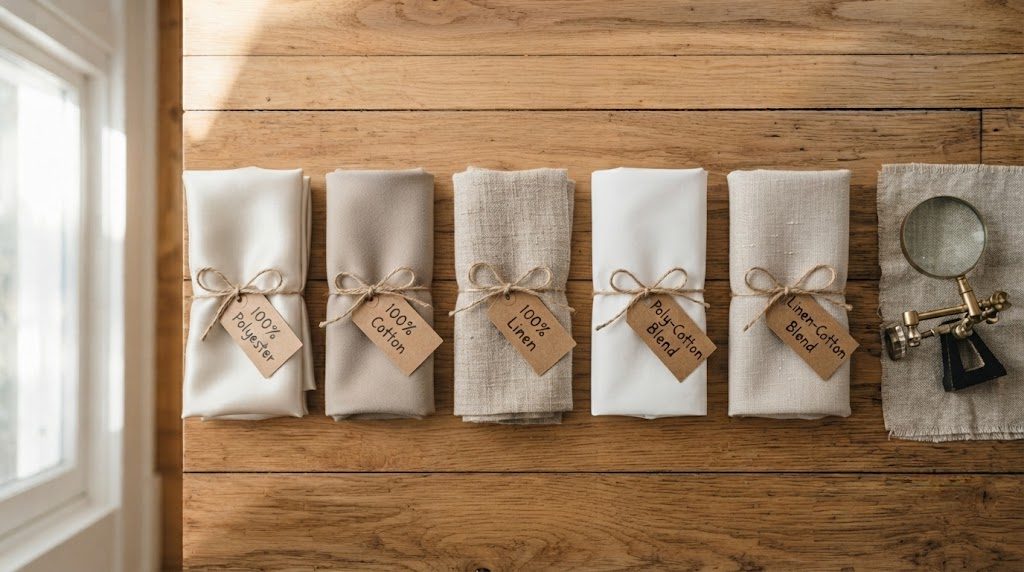
Walk down any curtain aisle and the labels blur together: “linen look,” “cotton-rich,” “polyester faux silk.” Behind every marketing phrase is a fiber with a distinct personality—a set of physical properties that shape how the curtain hangs, handles light, insulates, and survives a season of sun. You don’t need to become a chemist. You just need to learn what each fiber actually brings to a window.
The Big Three Fibers: Strengths and Weaknesses
Polyester: The Pragmatist
Polyester is a synthetic workhorse. It resists wrinkles, mildew, and stretching, which makes it a strong candidate for bathrooms, kitchens, and any window that catches direct afternoon sun. It holds pleats well and can be engineered into high-density weaves for effective blackout. Its downsides: cheaper polyesters can feel slick or plasticky, and they lack the breathable warmth of natural fibers. For performance on a budget, a quality polyester with a matte finish is hard to beat.
Cotton: The Comfortable Classic
Cotton brings a soft, natural hand and excellent drape. It dyes deeply, so colors look rich and saturated. Unlined cotton breathes, which is lovely for air circulation, but it also fades faster under UV light and shrinks if you wash it carelessly. In a bedroom or living room where you want warmth and a relaxed elegance, a heavyweight cotton or cotton sateen is a beautiful choice—just plan to line it for light control and insulation.
Linen: The Textured Beauty (with Opinions)
Linen is the fabric everyone wants to touch: nubby, organic, effortlessly elegant. It drapes with a crisp, slightly slouchy character that synthetics struggle to replicate. But linen is also the most demanding of the three. It wrinkles deeply, can stretch or sag over time, and is prone to rot in persistently damp conditions. In a dry, low-moisture room—a formal living room or a guest bedroom—linen curtains are a luxury worth considering. In a steamy bathroom or a kitchen, keep linen far from the window.
When Blends Actually Make Sense
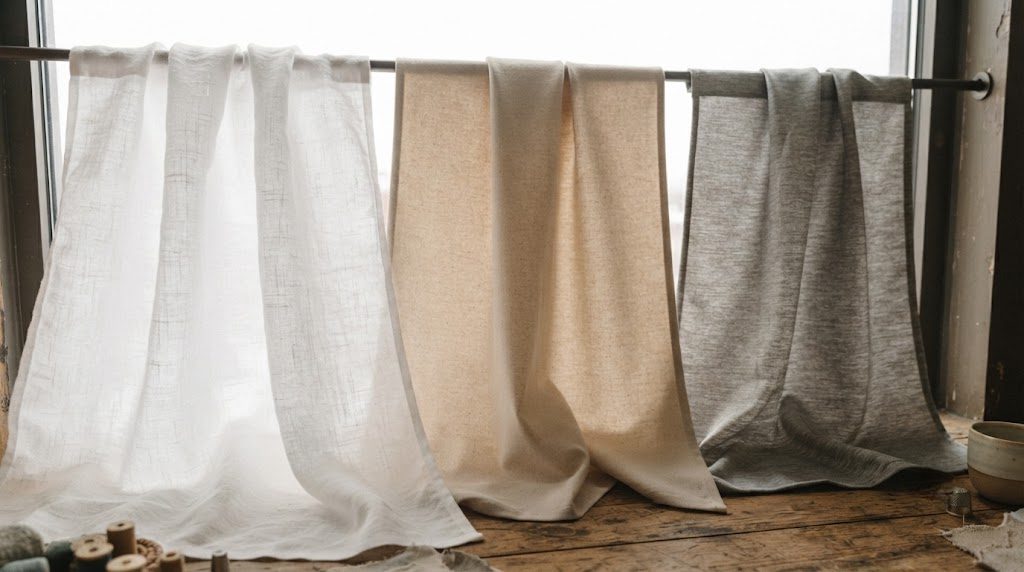
A blend isn’t a compromise; it’s a strategy. Pairing two fibers can cancel out each one’s worst habits while keeping its best.
Polyester-Cotton (Poly-Cotton)
This is the most common curtain blend, and for good reason. The cotton provides softness and a natural hand; the polyester adds wrinkle resistance, dimensional stability, and a lower price point. A 60/40 or 50/50 poly-cotton is an excellent all-purpose curtain fabric—less prone to fading than pure cotton, far more breathable than pure polyester.
Linen-Cotton
Adding cotton to linen softens its severe wrinkle habit and reduces cost. A 55% linen / 45% cotton blend keeps much of linen’s textural appeal while making the fabric easier to sew, hang, and live with. If you love the linen look but can’t abide creases that look like a road map, this is your fabric.
How to Read a Label and Actually Know What You’re Getting
Start with the fiber content tag, not the marketing name. “Linen blend” can legally mean only a small percentage of linen. If the label says “100% linen” on the front but the care tag reads “linen / viscose,” the viscose is doing the heavy lifting. Look at the thread count or fabric weight too—a lightweight pure cotton will behave entirely differently from a heavy one, regardless of fiber type. Let your fingers do the reading. Crush the fabric in your hand. If it springs back cleanly, it’s likely a polyester or poly blend. If it holds a crease, there’s significant cotton or linen content. That’s the first swatch test, and it works every time.


No letters yet — be the first to write.