Walk into any home goods store and you'll find curtains labeled "blackout" with confident percentages: 85%, 95%, 100%. The implication is clear: this number tells you how dark your room will be. The reality is messier. Blackout is not a single technology but a category that includes fundamentally different constructions, and the rating on the package captures almost none of what you actually need to know about durability, off-gassing, and long-term performance.
The Three Ways to Block Light
Coated Blackout: The Cheap Route with Hidden Costs
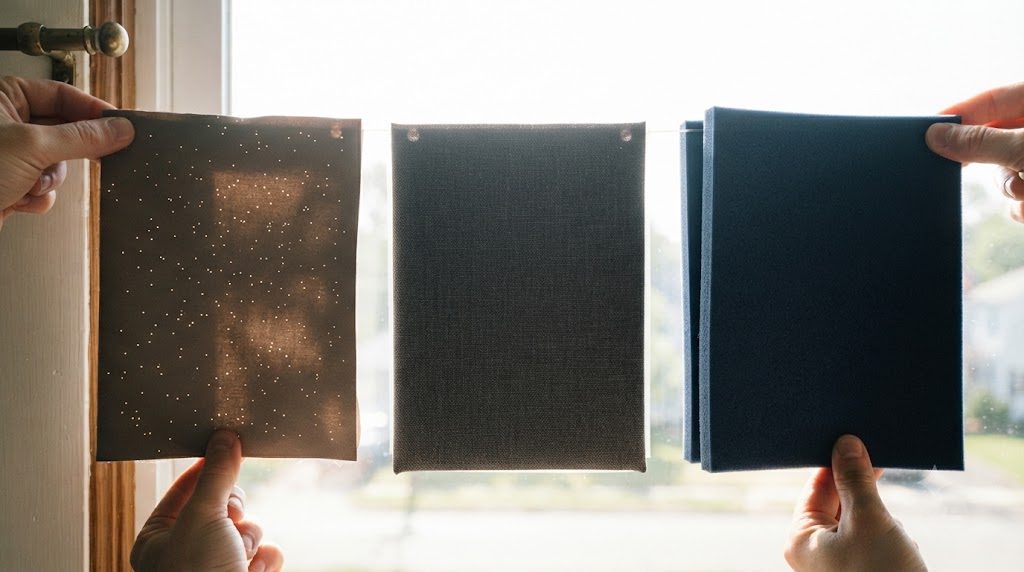
The most common budget blackout construction is a thin, light-colored fabric with a dark acrylic or polyurethane coating sprayed or rolled onto the back. This coating is what blocks the light—not the fabric itself. When new, a coated blackout panel can perform adequately, and the price is attractive.
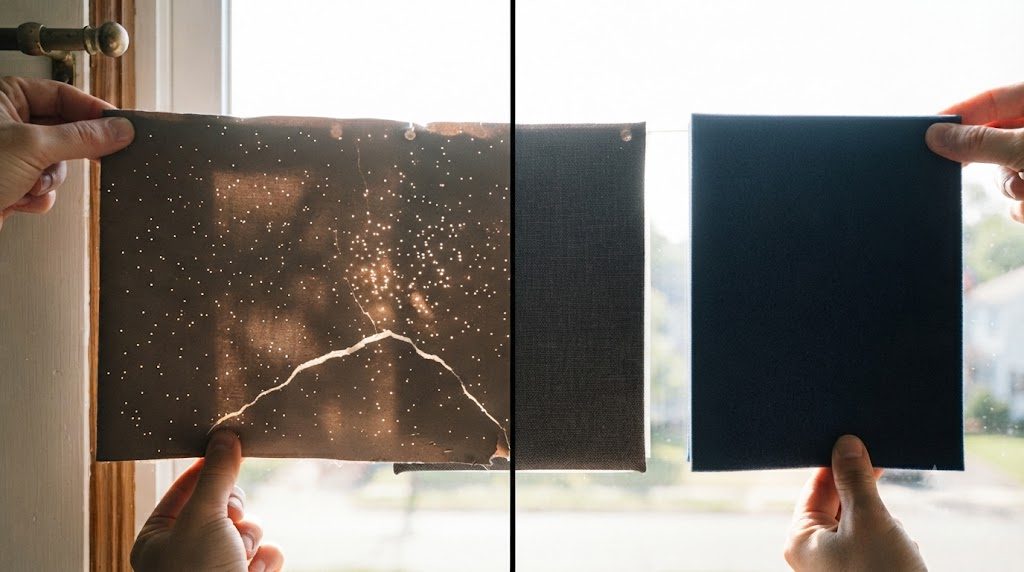
The problems start within the first year. The coating, especially on cheaper imports, begins to break down under UV exposure and heat cycling. It develops microscopic cracks that grow into visible pinholes when backlit. Once those pinholes appear, light streams through, and there's no repairing them. More concerning: some low-quality acrylic coatings off-gas volatile organic compounds, especially when warmed by direct sun. That "new curtain smell" isn't always benign. For a nursery or a south-facing window that bakes daily, coated blackout is a short-term solution at best.
Dense-Weave Blackout: The Textile-Forward Solution
Instead of relying on a chemical coating, dense-weave blackout achieves opacity through construction. The fabric is woven with such high yarn density—often using thicker yarns in a tight sateen or twill structure—that light simply can't find a path through. This is blackout built into the DNA of the fabric, not added as an afterthought.
Dense-weave blackout breathes better than coated versions, drapes more naturally, and won't crack or peel over time. It also tends to look like a real curtain rather than a plastic sheet. The tradeoffs are weight and cost. A true dense-weave blackout panel is heavier and more expensive than a coated equivalent. You'll need a sturdy rod and brackets, and you'll feel the heft every time you draw the panels. But for a permanent installation in a primary bedroom, the longevity justifies the investment.
Foam-Backed Blackout: Maximum Darkness, Minimal Elegance
The third option sandwiches a layer of foam—typically acrylic or polyurethane—between a face fabric and a backing. These are the curtains that feel thick, spongy, and vaguely industrial. They block light completely, and they also provide the highest insulation value of the three types because the foam traps substantial air.
The downsides are significant. Foam-backed curtains are stiff; they don't drape so much as they hang in place like a padded wall. They're heavy enough to challenge many residential rods. The foam layer can break down over time, especially in direct sun, leading to crumbling or delamination where the layers separate. And like coated curtains, foam-backed products can off-gas, sometimes for months. These are best suited for temporary setups—a rental bedroom, a media room where appearance is secondary—rather than permanent living spaces where you want curtains that move and look like fabric.
How to Test Blackout Before You Buy
The in-store light test is simple but revealing. Hold the swatch directly against a bright light source—a window, or even your phone's flashlight pressed to the back. Look for pinholes, uneven patches where the light comes through brighter, and any visible cracking in the coating or foam. Bend the fabric gently; if the coating shows white stress marks, it will crack with use. Scrunch it and listen. A coated fabric crinkles like paper; a dense-weave fabric sounds like cloth. Your hands and ears will tell you what the package won't.
The Lining Alternative
If you already own curtains you love that aren't blackout, adding a separate blackout liner is often smarter than replacing the entire panel. A high-quality dense-weave cotton sateen blackout lining, hung on a second rod behind the decorative curtain, gives you full light control without sacrificing the look you want. It's also easier to replace just the lining when it eventually degrades—and all blackout materials degrade, just on different timelines.


No letters yet — be the first to write.