If you are comparing bathroom window treatment ideas, start with the room's real job: stop sightlines, survive steam, and still let daylight do some work. In a bathroom, the wrong material fails fast. Cotton can sag, untreated linen can spot, and a cheap vinyl shade can curl if the vent fan is weak and the window sees winter condensation. I like to touch the fabric or finish first and ask one simple question: does it dry quickly and wipe clean, or does it behave like a sponge? That one test filters out a lot of pretty mistakes.
Start With the Window's Job, Not the Look
A window over a tub has a different brief than one over a vanity. The tub window needs privacy first, then light. A vanity window can often handle a little more openness because the sink blocks some of the view. If the glass faces a neighbor or the street, plan for coverage at night, not just daytime glare. If the bathroom has a fan and a window that opens, make sure the treatment does not interfere with the sash or catch on hardware. In older homes, I also look for drafts around the frame. A tighter treatment can take the edge off the cold glass, which matters more in January than people expect. This is why the best choice usually feels simple once you match it to the window's location.
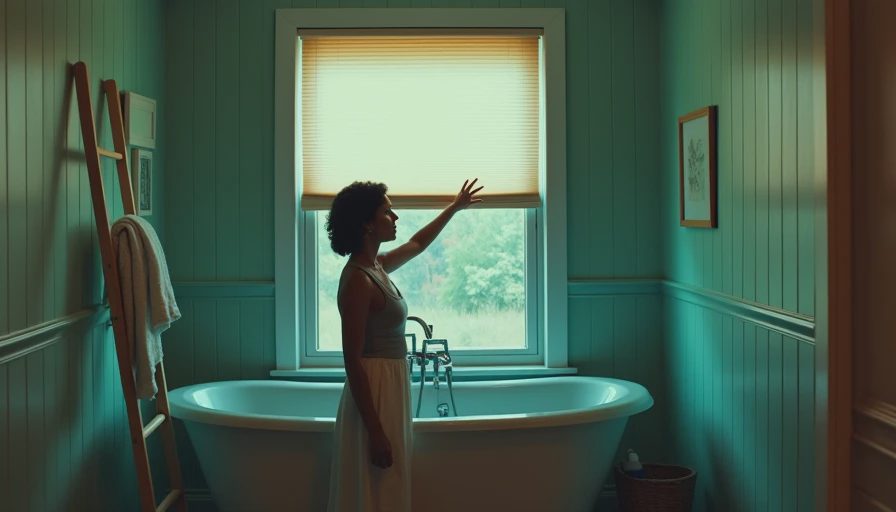
Bathroom Window Treatment Ideas that survive moisture
For a hard-working bathroom, I start with materials that do not mind humidity. Frosted film is the cheapest move and often the cleanest one if privacy is the only goal. A good film from a brand like 3M or Artscape can cost roughly $20 to $60 per window and gives you privacy without adding bulk. A vinyl roller shade is the next step up. It wipes clean, stays tidy, and usually lands around $25 to $80 for stock sizes.
If you want a more finished look, faux wood blinds are a strong middle ground. They give you slat control, but the PVC or composite versions hold up better than real wood in a damp room. Real wood can warp if the bathroom gets steamy enough. Aluminum mini blinds are less pretty, but they are light, inexpensive, and easy to replace. Cellular shades can work too, especially in a cooler climate, because the honeycomb pockets trap air and soften a draft. Just choose a moisture-tolerant fabric face and keep them away from direct splash zones. For most buyers, that is where the balance of price and performance starts to make sense.
Fabric choices for a softer bathroom
If you want softness, you do not have to give up function. Polyester and polyester-blend fabrics are the workhorses here because they resist wrinkling and dry faster than natural fibers. A tight weave matters more than a fancy pattern. Hold the swatch up to the light. If you can see a lot through it, the room will feel airier but less private at night. If the weave is dense, you get better privacy and less visual noise.
Cotton looks crisp, but in a bathroom it wants help from a lining and good ventilation. Linen is beautiful, yet untreated linen will wrinkle and can show water marks faster than a synthetic blend. That does not make it wrong; it just means the room has to earn it. A café curtain works well when you want the lower half covered and the upper half open to daylight. A Roman shade gives you a cleaner tailored line, especially if you choose a face fabric with a moisture-resistant backing. In a bathroom, I skip puddling at the floor. Fabric that drags collects dust, touches baseboards, and turns steam into a maintenance problem.
What I would buy at three budget levels
When clients ask me for bathroom window treatment ideas on a modest budget, I split the options into three lanes. Under $100, frosted film or a stock vinyl roller shade usually wins. It is the fastest path to privacy and the least likely to disappoint. Between $100 and $300, a quality faux wood blind or a cordless cellular shade starts to feel like a real upgrade. That is the range where brands like Bali, Graber, and Levolor have plenty of practical options. If you want custom work, expect the bill to climb past $300 quickly, especially for a made-to-measure Roman shade or café curtain with a lined and hemmed finish. The Shade Store and similar retailers sit in that custom lane, and the cost reflects measuring, fabrication, and the better hardware.
The point is not to spend the most. The point is to match the finish to the room so you are not replacing a cheap shade every two years.
Installation details that change the result
Mounting matters almost as much as material. An inside mount looks neat, but it can leave daylight leaks at the edges if the frame is crooked or shallow. An outside mount covers more glass and often improves privacy, which is useful for small bathrooms. If the window sits above a tub or near a shower spray, raise the treatment out of the splash zone. Cordless hardware is worth the extra money because it looks cleaner and removes one more thing to get wet. I also like rust-resistant brackets and screws. They do not photograph well, but they keep a bathroom from looking tired after a year of humidity.
If the room is cold, make sure the treatment does not sit so tight to the glass that condensation has nowhere to dry. Air needs a little space to move. That small gap can make a shade last longer and smell better.
A simple way to choose without overbuying
Pick the option that solves the room's biggest problem first, then spend for the next problem only if you still need to. If privacy is the issue, start with film. If the room needs light control and a cleaner finish, move to a shade or blind. If the space needs softness and a little insulation, choose a lined fabric treatment and keep the fabric away from direct splash. That is the short version of bathroom window treatment ideas that hold up in real life.
If you want a rule I use in my own house, it is this: choose the most moisture-tolerant material you can afford, then make it look intentional with good mounting and clean edges. Good bathroom window treatment ideas are the ones you can live with every day, especially after the vent fan has done its job a hundred times.



No letters yet — be the first to write.