The first thing I notice when I handle roller shades is not the color. It is the fabric’s hand: a thin polyester screen feels crisp and slightly dry, while a coated blackout cloth feels denser, smoother, and almost rubbery. That difference tells you plenty about how the shade will filter sunlight, hold its shape, and perform beside a cold window. In a Minneapolis winter, roller shades are not merely a clean design choice. They are a compact piece of textile engineering.
How roller shades are constructed
Most roller shades use a continuous sheet of fabric wrapped around a tube. Pull the bottom rail, and the material rolls upward rather than folding into pleats. The simplicity is useful because fewer folds mean fewer places for dust to settle and less visual bulk above the glass. It also means the fabric itself has to do nearly all the work.
Look closely at a sample in front of a window. A woven sunscreen fabric contains tiny openings created by the crossing yarns, similar to a very small basket weave. An openness factor describes how much of the cloth is made up of those openings. A 1 percent screen blocks more view and glare than a 5 percent screen, but it also makes the room darker. The yarn size, coating, and weave density all affect the final result.
A blackout shade is built differently. It usually has a tightly closed face fabric and an opaque backing, often acrylic or another polymer coating. Hold one toward a bright lamp: a good blackout sample should show little or no pinprick light. A room-darkening cloth can reduce light substantially without creating complete darkness, which is often more pleasant in a living room.
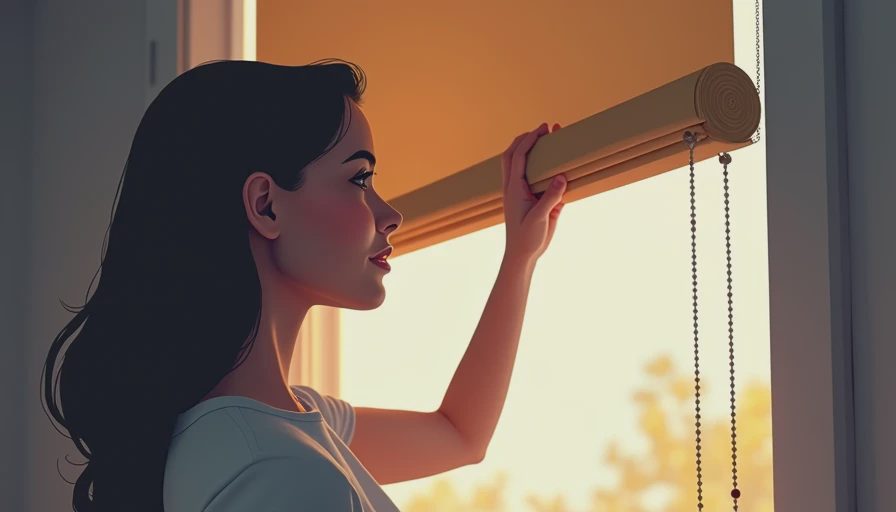
Light, privacy, and the view outside
Roller shades are easiest to choose when you consider the room’s job first. In a south-facing office, a 3 percent or 5 percent solar screen can cut harsh glare while preserving a muted view of trees or neighboring roofs. You will still see daylight, but the screen softens contrast so a laptop display remains readable. In a bedroom, a blackout option makes more sense, especially if streetlights or early summer sun disrupt sleep.
Privacy changes with the direction of light. During the day, a screen shade can prevent someone outside from seeing clear details while allowing you to look out. At night, the situation reverses if interior lights are on. The room becomes brighter than the exterior, and silhouettes can become visible. For a bathroom or street-facing bedroom, pair a screen with a privacy liner, use a more closed weave, or lower the shade after dark.
Color matters as much as openness. A dark charcoal screen often reduces glare effectively, but a light neutral can bounce more daylight back into the room. Darker interiors can improve the view through the glass; lighter interiors usually feel brighter. I test both sides of a swatch because the street-facing side and room-facing side may not use the same color.
Can they help with cold windows?
A window treatment cannot replace air sealing, storm windows, or better glazing, but roller shades can reduce the uncomfortable radiant chill near glass. The touch test is simple: stand near the window on a cold night before lowering the shade, then compare the same spot 20 minutes later. A shade with a dense backing creates a still air layer between fabric and glass, so the room-side surface feels less cold.
For the strongest effect, install the shade inside the window recess so the fabric sits close to the glass. Side gaps still allow air movement, however. An outside mount that extends 2 to 3 inches beyond each side can cover more of the window and limit light leaks. If insulation is the priority, choose a snug fit, a substantial blackout backing, and a bottom rail that rests close to the sill.
Do not expect a dramatic heating-bill transformation from one shade. The useful benefit is comfort: fewer cold drafts felt at a desk, sofa, or bed. If you can see daylight around the sash, address caulk, weatherstripping, and loose trim before spending heavily on window coverings.
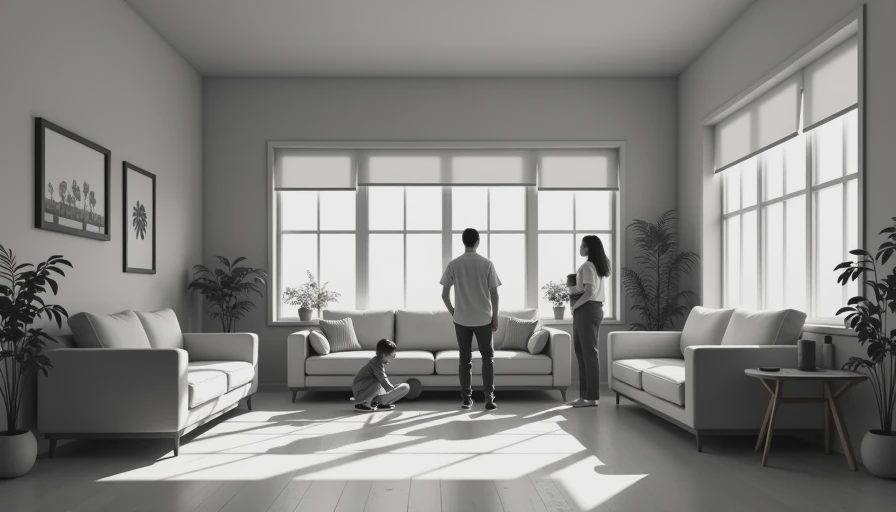
Comparing fabric types and prices
A basic vinyl roller shade may cost roughly $30 to $80 for a standard window. It cleans easily and works well in a laundry room or rental, but it can feel stiff and may show a stronger plastic sheen. Polyester blends usually sit in the $60 to $180 range and offer more convincing textures, smoother rolling, and better color options.
Solar screens often cost $100 to $300 per window depending on size, openness, cassette, and operating system. Their woven construction is excellent for glare control but not for complete privacy at night. Blackout shades commonly land between $120 and $350, with premium custom versions going higher. The extra price can buy a straighter hang, a more durable coating, quieter hardware, and better color consistency across several windows.
I am cautious about paying for a decorative texture that disappears when the shade is rolled up. Spend first on accurate sizing, a reliable tube, and the correct light-control construction. A beautiful fabric that stops several inches above the sill or develops edge curl is a poor value. Ask for a cut sample and inspect the edge, backing, and drape before ordering a whole room.
Measuring and installing correctly
Measure every window, even if two openings appear identical. For an inside mount, record the width at the top, middle, and bottom, then use the narrowest measurement according to the manufacturer’s deduction rules. Measure the height from the top recess to the sill. Check for handles, locks, and trim that could interfere with the roll.
For an outside mount, measure the glass and add enough width to cover the frame and reduce side light. A common starting point is 2 to 3 inches on each side, but deep trim or unusual proportions may call for more. Confirm that the headrail will clear the window opening and that the mounting surface can hold the brackets securely.
Cordless operation is cleaner and safer around children and pets. A chain loop can be practical for tall windows, but it needs a proper tension device. Motorization is convenient for hard-to-reach glass; entry-level systems often add around $150 to $400 per shade, while premium rechargeable systems cost more. Grouping several shades on one remote can make a large room far easier to use.
Choosing the right shade for your room
For a cold, drafty bedroom, I would choose an inside-mounted blackout shade with a dense backing and a close-fitting bottom rail. For a sunny office, I would choose a 3 percent screen in a medium or light neutral, then add curtains only if nighttime privacy matters. In a kitchen, washable polyester or vinyl usually makes more sense than a delicate textured cloth exposed to steam and grease.
The most successful installation balances textile performance with daily habits. If you raise the shade every morning, a cordless roller is convenient. If glare is the problem but the view is valuable, do not automatically choose blackout. If the window is visibly leaky, improve the frame first. Compare samples in your actual room at morning, noon, and evening, then choose the material that behaves well when the light changes—not just the one that wins in an online photograph.


No letters yet — be the first to write.