The care label on a good curtain is a contract. "Dry clean only" means the manufacturer believes water, agitation, or heat will damage the fabric. But when your drapes have been hanging for two years collecting dust, pollen, and the faint odor of last winter's radiator, the idea of paying a cleaning service more than the curtains originally cost is hard to swallow.
I tested five cleaning approaches on four common drapery fabrics to find out which rules can be bent and which ones break the curtain.
The Test Fabrics
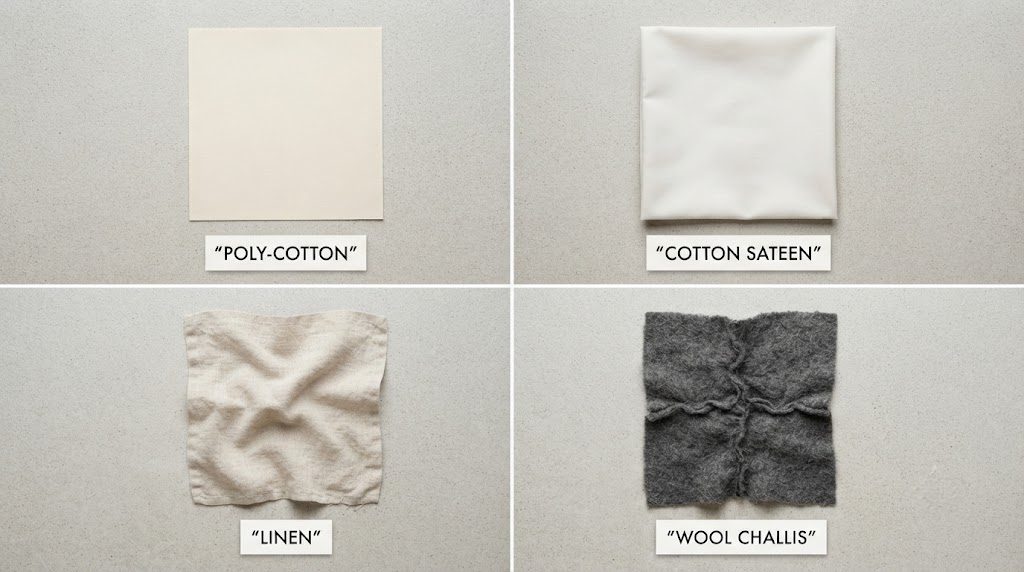
I sourced four unlined curtain panels of known fiber content: 100% lightweight wool challis, 100% midweight linen, 100% cotton sateen, and a 65/35 polyester-cotton blend. Each panel was cut into five identical swatches and subjected to a different cleaning method. I evaluated shrinkage, color change, texture change, seam integrity, and overall appearance after drying.
Method 1: Gentle Machine Cycle, Cold Water
Using a front-loading machine on the delicate cycle with cold water and a mild liquid detergent, I placed each swatch inside a mesh laundry bag for protection.
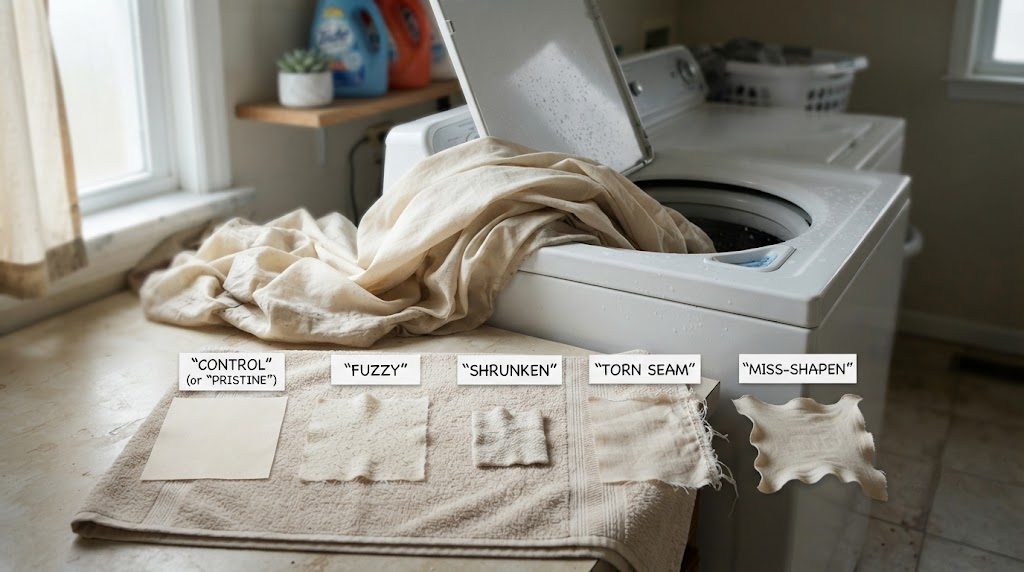
The poly-cotton blend emerged completely unscathed—no shrinkage, no texture change, seams intact. Cotton sateen lost some of its sheen and developed a softer, slightly brushed surface, but didn't shrink measurably. Linen softened significantly and lost its crispness, which might actually be desirable for a relaxed drape, though it shrank about 3% in length. The wool challis was a disaster: it shrank nearly 15%, felted into a dense, fuzzy mat, and pulled at every seam. For wool, even a gentle machine cycle is fatal.
Method 2: Hand-Wash in Cool Water
Each swatch was submerged in cool water with a teaspoon of mild detergent, gently agitated by hand for two minutes, rinsed in cool water until clear, and laid flat to dry.
The results mirrored the machine cycle but were slightly gentler across the board. The wool still felted, though slightly less severely—still unwearable. Linen shrank about 2% and softened. Cotton kept more of its original surface than the machine-washed version. Poly-cotton was flawless. Hand-washing reduces mechanical stress but doesn't eliminate the fundamental problem: animal fibers and water don't mix.
Method 3: At-Home Dry Clean Kit
I tested a widely available home dry-cleaning kit that uses a pre-moistened cleaning sheet tumbled with the fabric in a cool dryer.
This method was the gentlest on wool—the fabric emerged clean-smelling, unshrunken, and with its original surface intact. Linen and cotton showed no change. The poly-cotton was fine. However, the kit only handles light soiling and odors; it won't remove visible stains. For maintenance cleaning between professional visits, it's a useful tool. It won't rescue heavily soiled drapes.
Method 4: Professional Dry Cleaning
I sent one set of swatches to a reputable local dry cleaner. Every fabric returned in near-original condition. The wool was crisp and soft, the linen retained its body, the cotton still had its subtle luster, and the poly-cotton looked brand new. The cost was significant, but so was the outcome. For wool, silk, or any curtain with interlining, professional cleaning isn't optional—it's the only safe path.
Method 5: Do Nothing (The Control)
I vacuumed one set of swatches with an upholstery attachment and aired them outside on a dry, breezy day. This removed surface dust and freshened the fabric slightly but did nothing for deep-set odors or staining. For decorative curtains in low-use rooms, this approach, combined with regular vacuuming, can extend the time between real cleanings by years.
The Verdict by Fiber
Poly-cotton blends can handle cold machine washing. Cotton and linen can usually survive a gentle hand-wash if you accept some softening and minor shrinkage. Wool and any animal fiber must stay dry—home kits for maintenance, professionals for deep cleaning. And if your curtains are interlined, lined, or have weighted hems with multiple fabric layers, assume dry-clean only means exactly what it says. The lining and face fabric may shrink at different rates, causing the layers to pull apart and the hem to ripple permanently. That's not a cleaning experiment worth risking.
No letters yet — be the first to write.