When a homeowner asks me about custom blackout curtains, I don't start with colors or header styles. I start with the weave, because the weave stops light. I learned that during twelve years writing spec sheets for a national window-covering manufacturer. Cheap curtains rely on a thick coating that can crack and peel. Well-made custom blackout curtains use a dense, tightly woven fabric with a separate blackout interlining. That's why one panel costs $40 and another costs $250. The difference comes down to fiber, weave, and construction.
What "Blackout" Actually Means
Blackout is a performance claim, not a fabric name. In the industry, a fabric earns that label when it blocks 99% of visible light. That usually requires a coated backing or three-layer construction. You can test it yourself: hold a swatch against a bright window and look for pinholes. The best blackout weaves are so tight you can't see your hand through them.
The Three Construction Types: Coated, Woven, and Layered
Most budget panels are coated. A layer of acrylic foam is applied to the back of the face fabric. It works at first, but after a few wash cycles it can crack, especially in cold climates where the curtain flexes. Woven blackout fabric is different: the yarns themselves are engineered with a dark core that absorbs light. The layered option, which I prefer, combines a decorative face fabric with a separate blackout lining and sometimes an interlining. That's what you get when you order custom blackout curtains from a workroom or specialty retailer.
Lining Is the Real Workhorse
Don't obsess over the face fabric at first. The lining determines performance. A good blackout lining is typically a 3-pass acrylic-coated polyester that weighs around 200 g/m². It should have a soft, matte finish and a slight drape. Ask the workroom what lining they recommend for your climate. If you live in Minnesota like I do, add a thermal interlining, a felt-like layer between face fabric and lining. That adds insulation and cuts cold drafts. When you price custom blackout curtains, ask whether the quote includes both. Some workrooms charge $20 to $40 extra per panel for thermal interlining.
How to Measure and Order Custom Panels
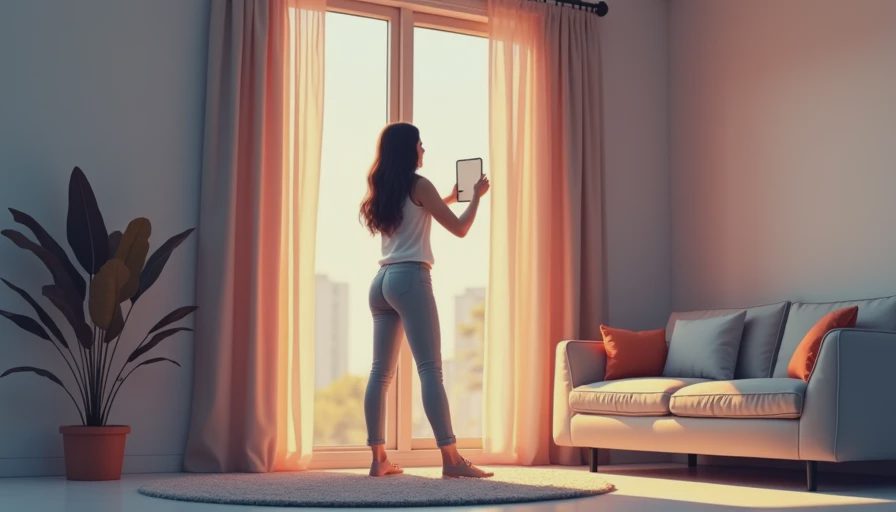
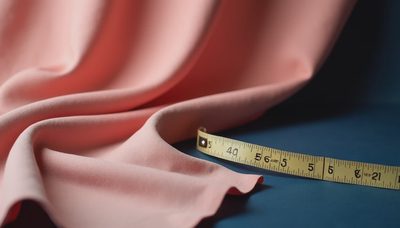
Custom means the panel fits your window, not a standard 42-inch drop. Measure the width of your rod or track, not the window frame. For a full drape, the panel should be two to three times the finished width. So a 48-inch window needs a 96- to 144-inch panel. Also decide how high you want the rod. Hanging it 4 to 6 inches above the frame makes the ceiling feel taller. Add 3 inches for hem allowance and 2 inches for the top fold. When you order, the workroom adjusts the width so the pleats land evenly. That's the main advantage of custom blackout curtains over ready-made: the pleats are calculated for your exact width.
Fabric Choices: What to Ask For When You Order
After the lining, pick the face fabric. For blackout, I like a mid-weight cotton velvet or a linen blend with a tight plain weave. Velvet is naturally dense and blocks light well without feeling stiff. Linen is beautiful but confirm the manufacturer has added a blackout lining behind it. Ask about light-fastness, too. The sun is hard on dark fabrics. If the panel faces south, choose a solution-dyed polyester or a fabric with a light-fastness rating above 5 if you can find it. Otherwise you'll notice fading within a few years. Don't let anyone sell you on thermal foam backing if you want a fabric that lasts.
What You're Paying For
Price varies widely. A basic custom blackout curtain from a mid-range online shop runs $150 to $300 per panel, including lining. A high-end workroom with hand-sewn pleats and silk can push $500 to $800 per panel. Rods, rings, and installation add more. You're paying for yardage, a proper lining, and labor. The good news: custom blackout curtains usually last 15 to 20 years if kept clean. That's a better cost-per-year than replacing cheap panels every few winters.

Are Custom Blackout Curtains Worth It?
I'll give you my honest answer. If your only goal is to sleep in on Saturday, a $30 room-darkening panel from Target might be enough. But if you work night shifts, have a sunny bedroom, or want to cut your heating bill, custom blackout curtains are worth it. The dense weave and proper lining handle both light and temperature far better than anything off the shelf. You feel it the first morning you wake up without the sun in your eyes.
What About Motorized or Top-Down, Bottom-Up?
Custom blackout curtains don't have to be plain panels. You can pair them with a motorized traverse rod for hard-to-reach windows. A basic motorized system adds $150 to $300 per window, installation not included. Top-down, bottom-up shades are another option, but they complicate the linings because the fabric has to stack neatly in both directions. If you want the simplest system, stick with a standard traverse rod and split panels that meet in the middle. That's the setup in my own bedroom, and it's been reliable since 2021.
Common Mistakes People Make
Ordering based on color swatch alone is a mistake. Hold the fabric up to your window at the time of day you care about. Also, don't assume heavy fabric equals better blackout. A 300 g/m² loosely woven wool can let in more light than a 200 g/m² tight cotton with a good lining. Another common error: ordering panels too short. Measure floor to ceiling and add 4 to 6 inches if you want a puddle. And always ask for a shrinkage allowance, since blackout lining can shrink slightly.
Quick Checklist Before You Order
- Measure the width of the rod or track, not the window frame.
- Multiply the window width by 2 to 3 for the panel width.
- Decide on a lining: 3-pass coated polyester for blackout.
- Add thermal interlining if you live in a cold climate.
- Pick a face fabric with a tight weave; velvet is a good default.
- Ask about light-fastness and washability.
- Get a sample swatch and hold it up to a window before ordering.


No letters yet — be the first to write.