When I hold a good textile swatch against a cold Minneapolis window, I notice two things immediately: how much light passes through it and how much air seems to move near the glass. Window shades are often sold as a simple decorating decision, but their fabric, structure, and installation affect privacy, glare, heat loss, and the way a room feels in January. The right choice is less about picking a fashionable color and more about matching construction to the window and climate.
I have spent years reading performance specifications for window coverings, and the biggest mistake I see is comparing only the front surface. A $40 polyester shade and a $240 cellular shade can both look neat from across the room. They do not manage temperature, light, or daily wear in the same way. Touch the two fabrics, hold them toward a lamp, and the difference becomes obvious.
How window shades manage light and heat
A thin roller shade feels smooth and tightly packed under your fingers. Its performance comes mainly from the coating or weave rather than from thickness. A room-darkening roller shade uses a dense substrate and often a backing that blocks light; a sunscreen roller shade uses an open weave that reduces glare while preserving a view. The openness factor describes how much of that weave remains open, so a 5 percent fabric generally admits more view and daylight than a 1 percent fabric.
Cellular shades feel springy because their fabric is folded into air pockets. Those pockets create a layer of still air between the room and the window, much like the loft in a winter jacket. For a drafty double-hung window, that construction usually offers more insulating value than a flat roller shade. Single-cell designs are slimmer and less expensive; double-cell designs add depth and can be worthwhile on very cold exposures, although they cost more and stack higher when raised.
Woven wood shades bring a different sensory experience. Bamboo, grass, and reed fibers have visible slubs, small variations in thickness that prove the material is not perfectly uniform. Light filters through those gaps in a warm, patterned way. They are attractive, but the open construction does not automatically make them energy efficient. Add a room-darkening liner when privacy and nighttime darkness matter.
Which window shades suit each room?
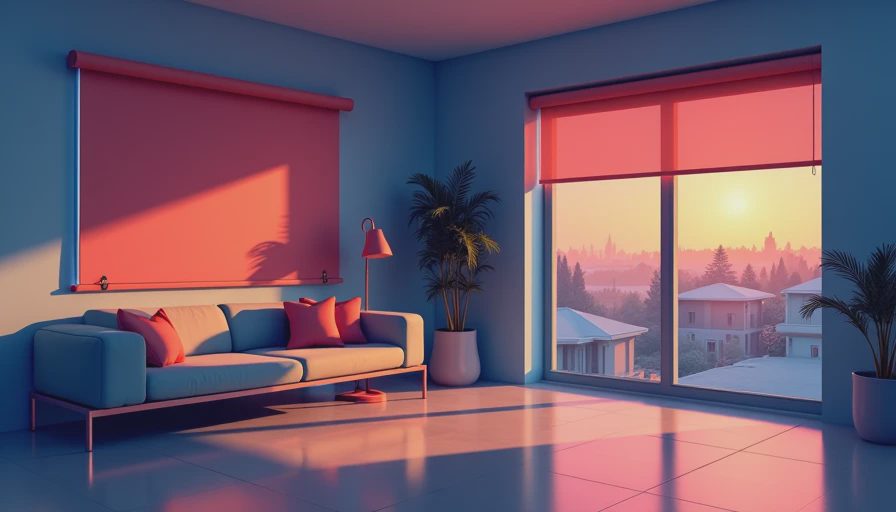
In a bedroom, I usually start with light control and then consider color. A pale blackout shade can make a room feel calmer without turning the window into a dark rectangle during the day. If the shade faces east, an opaque roller or lined Roman shade can soften early sun. For a nursery or guest room, cordless operation is also important because it removes dangling cords and gives the treatment a cleaner profile.
For a living room, the best window shades often balance glare reduction with a usable view. A solar screen can cut harsh afternoon brightness while letting you see trees, buildings, or the street outside. It will not provide complete nighttime privacy when interior lights are on, so pair it with curtains or choose a dual shade. A light-filtering cellular shade is another practical option when insulation matters more than preserving a clear view.
Kitchens demand fabrics that tolerate splashes and frequent handling. Smooth polyester is easier to wipe than textured grass cloth, and it is less likely to hold cooking odors. In a bathroom, humidity makes natural fibers a more cautious choice. Moisture can distort some woven materials and encourage staining, especially near a shower. Vinyl or treated polyester is usually easier to live with in that setting, even if it feels less luxurious.
Measure before you compare prices
Before ordering window shades, measure each opening separately. Older homes rarely have perfectly identical windows, even when the frames appear to match. Record the inside width at the top, middle, and bottom, then use the smallest measurement if the shade will mount inside the frame. Measure height on both sides as well. A difference of even a quarter inch can affect whether a roller shade operates smoothly.
An outside mount can make a small window look larger and can reduce light gaps. Extend the shade several inches beyond each side when wall space allows. This approach is especially helpful for blackout applications, since a narrow halo of daylight can appear around an inside-mounted shade. For cold-weather performance, keep the shade close to the glass while leaving enough clearance for handles, locks, and trim.
Do not forget the stack. A shade that rolls tightly into a small tube behaves differently from a cellular shade that gathers into a thick pleated bundle. Check where the raised shade will sit before placing it over a radiator, artwork, or a swinging cabinet door. A beautiful treatment that blocks heat circulation or cannot fully open will be frustrating every morning.

A practical way to compare materials
When I compare window shades, I use three quick tests. First, hold the sample six inches from a bright lamp. Look for pinholes, uneven coating, and whether the light feels soft or glaring. Second, bend the fabric sharply. A shade that creases into a brittle white line may have a less forgiving coating than one that flexes smoothly. Third, rub the surface with a clean cotton cloth. This will not reproduce years of use, but it reveals whether the finish feels stable or powdery.
Price often follows construction. Basic polyester roller shades can start near $30 to $80 per window, while custom solar or blackout rollers commonly reach $150 to $500. Cellular shades often fall around $100 to $400 per window, depending on size, fabric, lift system, and cell design. Custom woven shades and lined Roman shades can exceed $600. The higher price is worthwhile when it buys better fit, stronger hardware, a dependable lining, or a fabric that will not show every fingerprint.
I would spend first on the room with the greatest exposure problem. A north-facing office may need only glare control, while a bedroom above an uninsulated porch may benefit from a well-fitted insulating shade. Put money into measurement and installation before paying extra for a decorative weave that does not solve the actual problem.
Where window shades work best with curtains
Window shades do not have to replace drapery. In a cold room, a shade close to the glass handles daily light control while full-length curtains add a second air barrier. Leave a small gap between the curtain fabric and a steam radiator so warm air can circulate safely. Mounting the rod several inches wider than the window lets the curtains clear the glass when open and reduces the chance of trapping condensation.
The fabric pairing matters. A dense wool blend curtain beside a cellular shade creates a noticeably heavier visual and thermal effect than sheer linen beside a solar screen. Linen can be beautiful, but its loose weave is better at filtering light than stopping drafts. If you want that relaxed texture, use a lined version and accept that the lining, not the linen face, is doing most of the performance work.
My buying checklist for a comfortable room
Start with the problem you are trying to solve: glare, privacy, darkness, drafts, or all four. Then identify the window orientation and measure every opening. Request fabric samples rather than judging a product from a screen, because color and openness change dramatically in morning and evening light. Look for cleaning instructions, warranty terms, lift type, and the shade's fully raised dimensions.
For most cold-climate bedrooms, I favor a properly fitted cellular shade with a light-filtering or blackout option. For a sunny office, a solar screen is often more useful. For a dining room where texture matters, woven wood can be excellent when paired with a liner. The best window shades are not necessarily the most expensive ones; they are the ones whose fiber, weave, backing, and hardware match the work the window must do.
Once you have narrowed the options, order samples, compare them at the glass, and price the complete installation rather than the fabric alone. That small amount of testing can prevent an expensive mismatch and make the room warmer, calmer, and easier to use every day.



No letters yet — be the first to write.