When I handle a sample of window blinds, I start with the same question I ask about any textile: what does the material do when light touches it? A thin polyester vane can glow at the edges, while a dense woven shade turns afternoon sun into a soft, quiet band. That difference affects privacy, room temperature, glare, and how expensive the finished treatment feels. In a cold climate, the right choice also matters at the glass, where winter drafts and radiant heat loss are most noticeable.
Start with the material, not the color
Run your fingers across a basic vinyl blind and then across a woven polyester shade. Vinyl feels smooth, cool, and slightly rigid. It is inexpensive, easy to wipe clean, and useful in kitchens, bathrooms, and rental apartments. Its weakness is visual and thermal: thin slats rarely create a substantial barrier at the window, and cords or tilt mechanisms can make the product look utilitarian.
Polyester has more range. A tightly woven fabric can feel crisp and dry, almost like a good shirt, while a loosely woven screen fabric feels open and mesh-like. The weave controls how much daylight enters and how clearly you can see through the treatment. A dense weave usually offers stronger privacy and a more finished appearance, but it can also reduce the daylight that makes a north-facing room feel alive.
Wood and faux wood bring a different kind of weight. Real basswood slats feel warm and light in the hand, with subtle grain that changes across the surface. Faux wood is heavier and generally more resistant to moisture. That weight helps window blinds hang steadily, but large blinds can place considerable load on the mounting brackets. Measure the opening and follow the manufacturer’s maximum width rather than assuming one headrail works for every window.
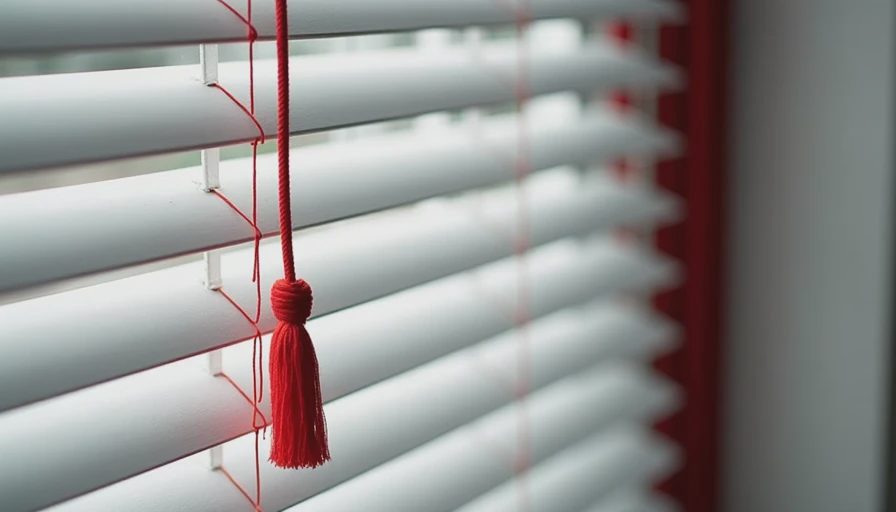
How construction changes comfort
Hold a sample in front of a bright lamp. A single layer of fabric shows its weave immediately; a cellular shade shows pockets, folds, and air spaces. Those pockets are not a miracle insulation system, but trapped air can slow heat movement at the glass. A double-cell design generally creates a more substantial barrier than a single-cell version, especially when the shade fits closely inside the frame.
This is where window blinds differ from lined drapery. A blind sits near the glass and controls light with slats, vanes, or a compact fabric stack. A lined curtain can cover more wall area and seal the sides when mounted several inches beyond the window. In my Minneapolis bungalow, I often use both: an insulating shade for the glass and a full-length curtain to reduce side drafts and soften the room acoustically.
Look closely at the top and bottom edges. A fabric shade with clean hems and a weighted bottom rail will usually operate more smoothly than one with a loose edge that twists. On horizontal blinds, tightly aligned slats close into a more continuous surface. Gaps between slats are not just a cosmetic issue; they create visible glare and weaken privacy after dark when interior lights are on.
Choosing light control by room
Bedrooms need a different treatment from living rooms. For a bedroom, blackout window blinds are useful when the goal is darkness, but “blackout” should describe the fabric or slat closure, not necessarily the entire window. Light can still leak around the sides and top. An inside mount leaves the cleanest frame, while an outside mount extending beyond the opening can reduce those bright borders.
In a home office, total darkness may be less important than glare control. A solar screen fabric filters direct sunlight while preserving some outward view during the day. Its openness factor describes the size of the weave openings; a lower percentage usually blocks more light and offers more privacy. At night, however, the balance reverses: a bright room can become visible from outside unless a separate privacy layer is closed.
For a living room, consider how the treatment looks when it is open. Wood slats create horizontal rhythm, while Roman shades fold into broad, soft layers. Roller shades take up little space and suit a simple interior, but their flat surface exposes every crease and edge, so fabric quality matters. Window blinds should support the room’s daily use, not force you to keep them closed because the mechanism is awkward.
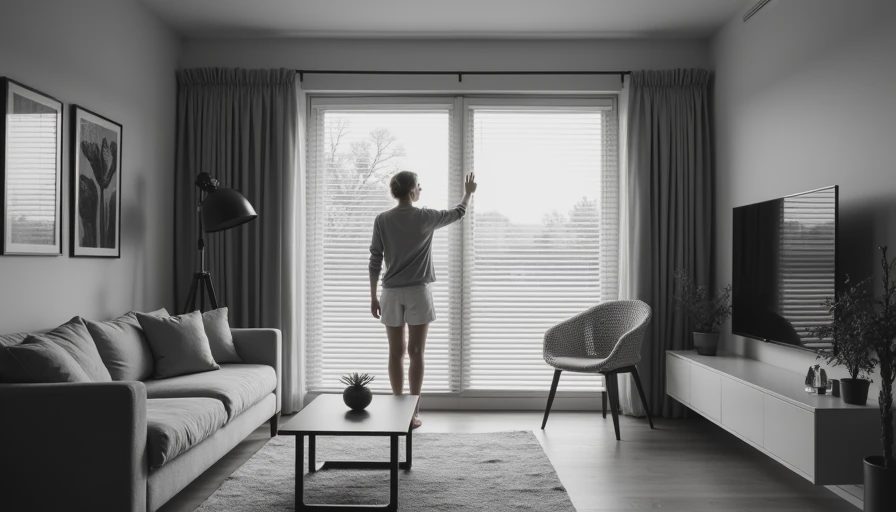
What quality looks like in the details
Price differences often come from construction rather than a mysterious designer markup. A $30 vinyl blind may have thin slats, a lightweight headrail, and a basic lift system. A $150 to $400 custom woven shade may include stronger hardware, a better-finished hem, precise sizing, and a fabric tested for light stability. You are paying for repeatable operation and a cleaner fit as much as for color.
Inspect the sample in daylight and at night under indoor lighting. Look for uneven yarns, puckering at the seams, crooked bottom rails, and a pattern that fails to align across adjacent windows. These flaws become more obvious when several window blinds share one wall. Ask whether the fabric is rated for sunlight and whether replacement components are available. A shade that can be repaired after eight years is often a better purchase than a cheaper product discarded after two.
Hardware deserves attention too. Metal brackets should feel rigid rather than springy, and the operating chain or cordless handle should move without catching. For homes with children or pets, cordless designs reduce dangling loops and simplify the appearance. Motorized options can cost several hundred dollars per window, but they are especially practical for tall windows, hard-to-reach transoms, or a bank of shades that needs to close at the same time.
Measuring before you order
Measure each window separately, even when the openings appear identical. Older homes often have frames that differ by a quarter inch or more. For an inside mount, measure width at the top, middle, and bottom, then use the narrowest measurement according to the supplier’s deduction rules. Measure height in several places as well. For an outside mount, decide how far the treatment should overlap the frame, then record the finished width and height you want to cover.
Do not forget handles, locks, cranks, and trim. A window that opens inward may collide with a deep shade or a protruding bottom rail. If you are combining window blinds with curtains, leave enough clearance for the rod and fabric to move without rubbing. One careful ten-minute measuring session can prevent a costly remake, especially when a custom order cannot be returned.
A practical buying plan
Begin with the room’s worst problem. If summer glare is damaging furniture, prioritize solar control and ultraviolet filtering. If winter comfort is the issue, look for a close-fitting cellular shade and add side-covering drapery where the room allows it. If privacy is the priority, test the sample from both sides of the glass after sunset rather than relying on a product photograph.
Then compare three samples at the same window: an inexpensive vinyl option, a mid-priced woven or roller shade, and a better-constructed cellular or Roman shade. Open and close each one repeatedly. Stand six feet away and inspect the surface. Touch the bottom rail, examine the seams, and listen for rattling. That small comparison tells you more than a catalog description.
The best window blinds are not automatically the most expensive. They are the ones whose fiber, weave, hardware, and mounting style match the climate and the way you live. Spend more where the hand, fit, and daily operation improve; save where a simple washable material solves the problem. If you choose by performance first, the finished room will look considered because it will work well every day.



No letters yet — be the first to write.