Curtains are often chosen by color first, but in a cold-climate home, the cloth itself deserves equal attention. Run your hand over a dense wool blend and then a thin polyester voile: one feels springy and substantial, while the other feels almost weightless. That difference affects how curtains hang, filter sunlight, soften sound, and slow drafts around older windows. After twelve years developing window fabrics, I look at fiber, weave, lining, and installation before I decide whether a treatment is truly worth its price.
Start with the fiber, not the color
Cotton curtains feel familiar because the fiber is soft, breathable, and easy to dye. A tightly woven cotton can make a handsome everyday treatment, but unlined cotton is not automatically warm. It can absorb humidity, crease near radiators, and fade in strong afternoon sun. Linen has a beautiful dry hand and a relaxed texture, yet its open weave often lets more light and air through than homeowners expect.
Polyester is less romantic, but it earns its place. The fiber is naturally resistant to shrinking, usually holds color well, and can be engineered into a dense fabric that resembles linen, velvet, or silk. For a rental or a busy family room, good polyester curtains can deliver predictable performance for less money. The cheap versions, however, may feel slick and collapse into narrow folds because the yarns and finishing are lightweight.
Wool brings natural loft. Loft means tiny spaces within the fiber structure that trap air, much like insulation in a winter coat. Wool curtains can look rich and fall beautifully, but they are expensive, commonly costing $80 to $150 per yard before labor. You do not need wool in every room. A wool-blend face fabric or a substantial lining can provide much of the visual weight at a more manageable price.

Weave determines how light behaves
Touch a sheer voile against a jacquard, a patterned fabric made with complex woven structures. Hold both toward a window and the difference becomes obvious: the voile glows evenly, while the jacquard breaks up light through a denser surface. A plain weave crosses the yarns in a simple over-under pattern. It is stable and often affordable, but it may look flat. A twill weave creates a subtle diagonal line and generally gives fabric more drape and durability.
The word “drape” describes how a textile falls under its own weight. A fluid rayon blend can cascade in soft, close folds, while a crisp cotton canvas projects outward and makes more architectural pleats. Neither behavior is automatically better. Curtains beside a steam radiator need enough body to hang clear of heat, while a bedroom treatment may benefit from a softer fall that closes into a continuous layer.
Look closely at the reverse side before purchasing. If the pattern nearly disappears on the back, the fabric may be printed rather than woven. Printing is not a flaw, but printed color can fade sooner in intense sun. Woven patterns usually cost more because they require additional yarn planning and loom time. For a south-facing room, ask about light-fastness information rather than assuming a high price guarantees it.
Lining is where warmth becomes practical
A lining is a secondary fabric sewn behind the decorative face. Standard lining gives curtains a smoother reverse side, improves folding, and protects the face cloth from some ultraviolet exposure. In my Minneapolis bungalow, lined panels also reduce the cold radiant feeling near original double-hung windows, even when they do not eliminate the actual air leak.
Thermal lining usually adds a foam or acrylic-backed layer. It can improve privacy and reduce heat transfer, but it changes the hand: the panel feels heavier and less flexible. Blackout lining blocks much of the visible light and works well in bedrooms, nurseries, and media rooms. It is not identical to thermal lining, although some products combine both functions.
For most cold rooms, I prefer a substantial face fabric paired with a separate lining rather than a very thin “thermal” curtain that relies on a plastic-feeling coating. Expect lining to add roughly $15 to $40 per panel in ready-made products and considerably more in custom work. Spend that money where the panels close fully at night. Decorative stationary side panels cannot provide the same insulating benefit because they leave the glass exposed.
Size and installation matter as much as cloth
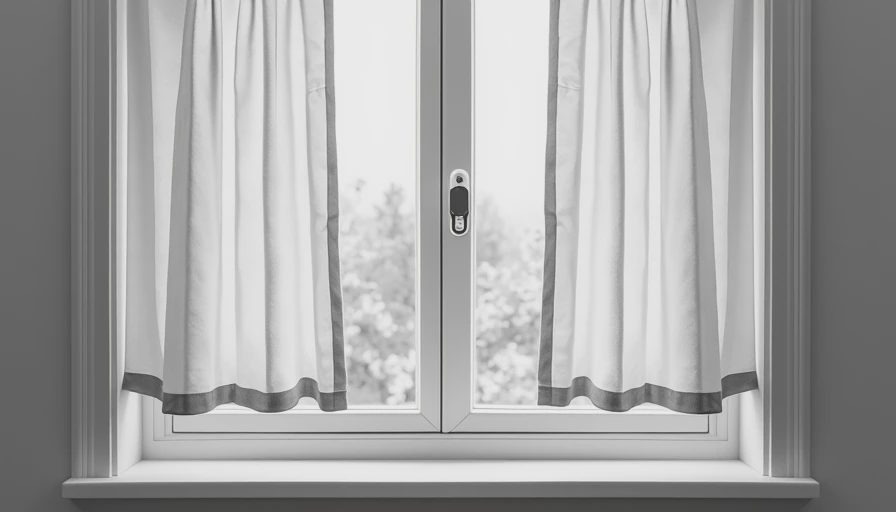
Even excellent curtains perform poorly when they stop at the window frame. Mount the rod several inches above the frame and extend it beyond both sides so open panels stack against the wall instead of covering glass. In a drafty older house, mounting close to the ceiling is not always necessary; a clean position four to eight inches above the frame often gives a polished result without creating an awkward gap.
Measure width before length. For fuller folds, the finished fabric width is commonly 1.5 to 2.5 times the rod width. A 60-inch window with a 72-inch rod therefore needs about 108 to 180 inches of total fabric width, depending on the fullness and fabric thickness. Thin sheers need more fullness to look intentional, while heavy velvet can look crowded at the same ratio.
Curtains should reach the floor in most living areas, with the hem barely touching or floating about half an inch above it. A puddled hem can look luxurious in a formal room but collects dust and complicates cleaning. Keep panels away from radiators and heaters where possible. Heat can dry fibers, discolor finishes, and create a safety concern, particularly with synthetic fabrics.
What should you spend?
At about $12 to $25 per yard, basic polyester or cotton blends can be sensible for a guest room, temporary apartment, or window that receives little direct sun. The tradeoff is often thinner construction, less graceful folding, and limited lining choices. Around $30 to $70 per yard, you start finding better yarns, denser weaves, more stable widths, and fabrics that hold a tailored pleat.
Custom curtains using premium linen, wool blends, or performance textiles can reach $100 to $200 per yard after specialized finishing, although the fabric is only part of the bill. Labor, lining, interlining, pattern matching, hardware, and installation add substantially. Pay for quality construction where you will touch it: straight hems, reinforced headings, properly weighted corners, and a lining attached without puckering.
Do not overspend on a dramatic fabric for a window that receives harsh sun unless the manufacturer provides useful performance information. Conversely, a north-facing bedroom may not need expensive fade resistance. The smartest budget divides money according to exposure, privacy needs, and how often the treatment will move.
A practical buying sequence
Begin by recording the window width, finished rod width, desired length, radiator location, and direction of sunlight. Take those notes to a fabric showroom or order sample cuts rather than judging from a small online color square. Hold each swatch against the glass during morning and late-day light. Rub the surface between your fingers, check whether the pattern is woven or printed, and bend the cloth to see whether it springs back or stays crushed.
Next, decide what the room needs. A bedroom may prioritize blackout and privacy. A living room might need filtered daylight and graceful movement. A home office may benefit from glare control without losing all natural light. Then select the face fabric, lining, heading style, and hardware as one system. Pinch pleats, ripplefold, and grommet tops each distribute fullness differently, so a beautiful bolt can still look wrong with the wrong heading.
Curtains are not just a finishing touch. They are a layered textile system that changes the way a room handles light, temperature, sound, and daily wear. If you compare the fiber in your hand, the weave at the window, and the lining behind it, you can spend $25 per yard intelligently—or justify $120 per yard because the performance is genuinely there.


No letters yet — be the first to write.