Window coverings are often sold as a finishing touch, but in a cold-climate house they are part of the building envelope. Stand beside an uncovered window on a January night and you can feel the temperature drop across the glass. The right window coverings slow that radiant chill, manage sunlight, protect furnishings, and make a room feel finished. The wrong ones simply hang there looking attractive while cold air gathers at the sill.
I have spent years comparing curtain fabrics, lining systems, shades, and hardware by touch and by performance. My goal is not to name one universal winner. Your best choice depends on the window, the direction it faces, the room temperature, and whether you value darkness, privacy, or a soft pool of winter sunlight.
Start with the window, not the catalog
Run your hand along the frame before shopping. Is the sash cold? Do you feel a draft at the meeting rail, or only a cool surface near the glass? Window coverings cannot repair failed weatherstripping, a loose pane, or a gap around the casing. Seal those problems first with appropriate caulk, rope caulk, or replacement weatherstripping. Otherwise, an expensive curtain becomes a bandage over an air leak.
For an older double-hung window, I typically look for a treatment that reaches several inches beyond the frame on both sides and above the top casing. That overlap reduces edge leakage and prevents bright side gaps. A curtain that stops at the glass is easier to install, but it gives up much of its insulating advantage. Inside-mount shades have a cleaner profile, while outside-mount shades can cover more of the opening.
Window coverings also need clearance from steam radiators, baseboard heaters, and heat pumps. A full-length drape over a radiator can trap warm air against the glass and waste heat. In that situation, a shade or a drape that ends above the radiator may perform better than a floor-length panel.
How fabric weight and weave change performance
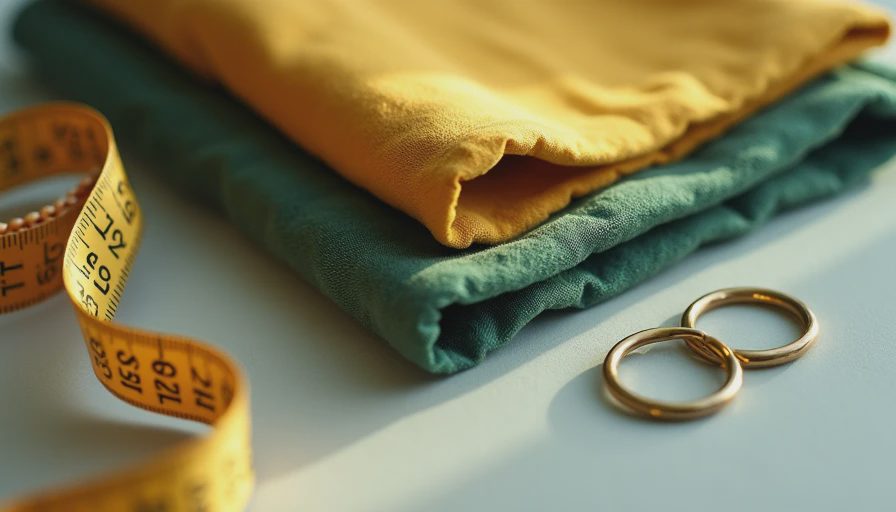
Pick up two samples and let them fall over your hand. A dense wool blend feels substantial and drops in a straight, quiet line. A loosely woven linen feels cooler, more irregular, and lets small points of light through. That difference is the weave talking. Weave density describes how closely the yarns are packed; it affects privacy, light transmission, durability, and how much air moves through the cloth.
Fabric weight matters, but weight alone does not equal insulation. A heavy unlined cotton can still conduct cold toward the room. A medium-weight polyester or cotton face fabric with a properly fitted thermal lining can perform better because the lining creates a more continuous barrier. “Thermal” is not a magic fiber category; it usually describes a coating, interlining, or tightly constructed layer.
For drapery, I like a three-part build in genuinely cold rooms: an attractive face fabric, a dense lining, and, when the window is especially exposed, a bump or interlining between them. Interlining is a soft insulating layer sewn between face and lining. It adds body, muffles street noise, and helps pleats hold their shape, but it also raises labor and material costs.
A $12-per-yard fabric may be perfectly sensible for a guest room. A $120-per-yard wool, silk blend, or custom jacquard may justify its price when its color, hand, pattern scale, and construction are exactly right. You are paying for fiber quality, yarn consistency, finishing, and design development, not automatically for better heat control.
Choosing among curtains, shades, and blinds
Curtains create the softest visual effect and are easiest to layer. Pairing a woven shade with lined side panels gives you daytime privacy, nighttime insulation, and adjustable light. Cellular shades use folded air pockets to create a thermal buffer, making them useful when a narrow sill or radiator rules out a deep drapery stack. Their fabric is usually technical rather than luxurious, but the geometry is effective.
Roman shades offer a tailored look, though their seams and folds can leave small channels where light and air move. Roller shades are economical and clean-lined, but an unlined roller will not feel as warm as a lined drape. Wood or faux-wood blinds provide precise light control, yet their slats have gaps; they are better for privacy and glare than for maximum insulation.
The most practical window coverings often combine two systems rather than forcing one product to do everything. In my Minneapolis living room, a close-fitting shade handles glare and privacy, while lined panels close over it after sunset. The shade stays compact during the day, and the heavier fabric does the winter work at night.

Lining, fullness, and installation details
Look at the back of a curtain before judging the front. A white lining reflects summer sunlight and protects the face fabric from ultraviolet fading. A blackout lining blocks more light but can make a fabric look stiffer and slightly different from the sample. For a bedroom, that tradeoff is often worth it. For a living room, standard lining may preserve a more natural drape.
Fullness describes how much fabric is used compared with the rod width. A pair of panels made with roughly one-and-a-half times the rod width will look relatively restrained. Two times fullness creates richer folds, while very heavy fabrics may need less fullness because they already occupy visual space. Too little fabric makes even good window coverings look skimpy and exposes gaps when closed.
Mount the rod high enough to lengthen the wall, but do not ignore structure. A wide, lined pair of panels is heavy; drywall anchors alone may fail over time. Use studs where possible, or rated anchors matched to the load. Return the rod toward the wall at each end if you want less side leakage.
What deserves your budget
Spend first on fit and installation. A moderately priced fabric cut correctly, lined well, and mounted close to the opening can outperform a luxury fabric hung too narrowly. Next, pay for the lining or interlining that suits the room. Those layers affect warmth, darkness, privacy, and the way the face cloth hangs every day.
Save on decorative details that do not change performance. A simple pinch pleat can look as polished as an elaborate cartridge pleat when the fabric has enough fullness. Standard metal hardware can be durable and quiet; custom brass finials are a style decision, not an insulation upgrade. If you have several windows, prioritize the rooms with the coldest glass, the bedroom where darkness matters, and the space used most often.
Before ordering, measure the glass, frame, trim, and usable wall space. Record the rod height, desired finished length, radiator location, and swing of nearby doors. Order a real swatch when possible. A photograph cannot tell you whether a polyester satin feels slippery, whether linen slubs are acceptable, or whether a dark lining changes the face color.
A sensible cold-weather window plan
Begin with draft control, then choose the treatment by function. Use cellular shades or lined Roman shades where space is tight. Choose lined curtains when you want softness, sound absorption, and flexible coverage. Layer both when the room faces harsh winter wind or receives strong summer sun. Keep fabric clear of heating equipment, and open coverings during sunny winter afternoons so free solar warmth can enter.
The best window coverings are not necessarily the thickest or most expensive. They are the ones whose fiber, weave, lining, dimensions, and hardware match the actual window. Feel the swatch, examine the back, and ask what happens at the sill on a cold night. That small test will tell you more than a glossy product label, and it will lead to a room that looks better because it performs better.



No letters yet — be the first to write.